Breaker Keeps Tripping? What It Means and What to Do
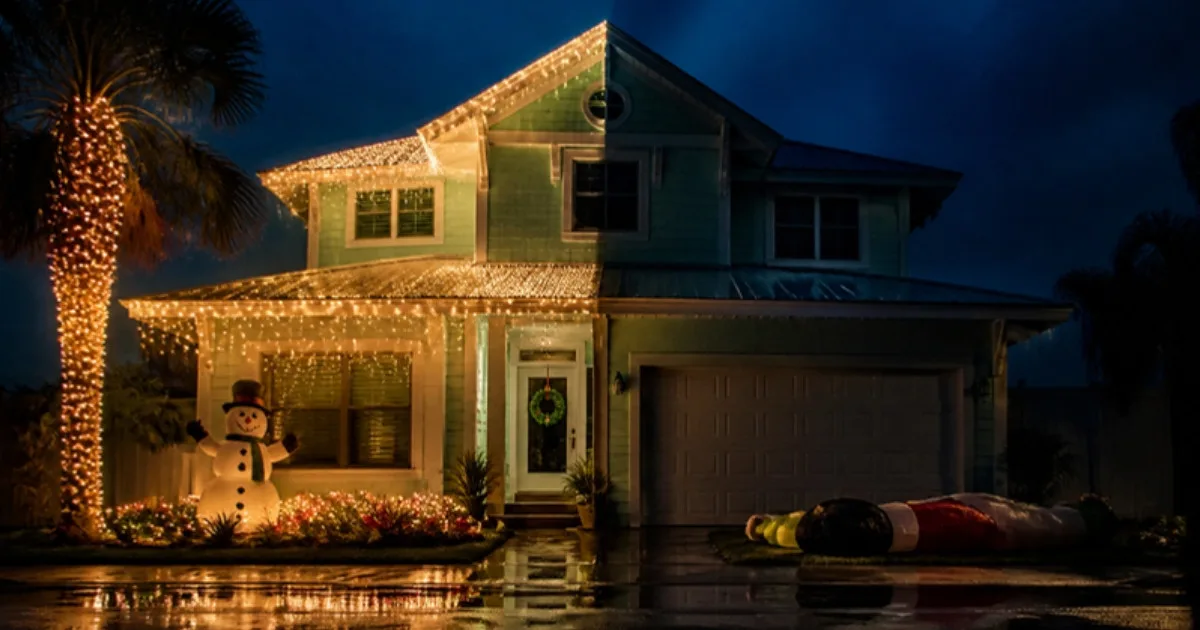
The lights are up, the inflatable snowman is filling with air, the oven is on for leftovers, and then everything on one side of the house goes dark. If a breaker keeps tripping this time of year in Panama City Beach, you are in good company. Holiday decorations, space heaters, and extra cooking all land on the same few circuits at once, and the panel lets you know.
When a breaker keeps tripping, the breaker is usually doing its job: it shuts off power because a circuit is overloaded, has a short, or has a ground fault or arc fault, and repeated trips mean the cause needs to be found and fixed.
Some of those causes are simple to fix yourself, like moving a space heater or a strand of lights to another outlet. Others point to worn wiring, a failing appliance, or a panel that is out of room. This guide explains the difference, what you can safely check, and when a breaker keeps tripping for a reason that needs a licensed electrician.
Why does a breaker keep tripping?
A circuit breaker is a safety switch. It watches the current on one circuit and shuts it off when something goes wrong. When the same breaker keeps tripping, one of four things is usually happening.
| Cause | What is happening | Common clues | What to do |
|---|---|---|---|
| Overloaded circuit | Too many devices drawing power on one circuit | Trips when a heater, hair dryer, or extra lights come on | Move some loads to another circuit |
| Short circuit | A hot wire touches a neutral or another hot wire | Trips instantly, sometimes with a pop, scorch mark, or burning smell | Leave it off and call an electrician |
| Ground fault | Current leaks to ground, often through water or a damaged device | GFCI trips outdoors, in kitchens, bathrooms, or garages, often after rain | Unplug devices on that circuit, dry things out, then call if it continues |
| Arc fault | Wiring or a cord is arcing, often from damage or a loose connection | AFCI breaker trips, sometimes with flickering lights | Have an electrician find the arcing |
The breaker itself can also wear out, but that is less common than people hope. A breaker that keeps tripping is far more often reporting a real problem than failing on its own.
What causes a breaker to keep tripping during the holidays?
When a breaker keeps tripping in November and December, the causes are very specific. Most of them are overloads and ground faults, and most of them are fixable.
Holiday lights and inflatables
Outdoor lights, inflatables, and lighted yard decorations often get plugged into the same outdoor outlet or a single garage circuit, sometimes with several extension cords daisy-chained together. Older incandescent light strands draw far more power than LED strands, and blower motors in inflatables add to the load.
Outdoor outlets are also GFCI protected, as they should be. When rain or heavy dew gets into a plug connection, a timer, or a damaged cord, the GFCI senses current leaking to ground and trips. That is why so many people notice that a breaker keeps tripping, or a GFCI outlet keeps tripping, the morning after a rainy night.
A few habits help:
- Use lights and cords rated for outdoor use.
- Switch older incandescent strands to LED, which draw much less power.
- Keep plug connections up off the ground and out of puddles.
- Use outdoor-rated covers for connections.
- Spread decorations across more than one circuit instead of loading a single outlet.
- Throw away any strand with cracked sockets, bare wire, or a damaged plug.
Space heaters
Space heaters are the other big reason a breaker keeps tripping in winter. A typical plug-in electric space heater draws up to 1,500 watts on high, which is about 12.5 amps on a 120 volt circuit. That is most of what a common 15 amp circuit can carry, so adding a TV, a lamp, or a laptop on the same circuit can push it over. Our guide to space heater safety covers how to plug one in and where to put it.
Kitchen loads on a big cooking day
Holiday cooking stacks the kitchen with roasters, slow cookers, mixers, coffee makers, and electric griddles, often on the same countertop circuit. According to the Electrical Safety Foundation’s 2025 survey of electrical contractors, the kitchen accounted for just over half of the tripping calls contractors reported, far more than any other room. If your kitchen breaker keeps tripping on Thanksgiving, spreading appliances across different outlets, on different circuits, usually solves it.
What should you do when a breaker keeps tripping?
Here is a safe order to work through before you call anyone.
- Unplug or switch off things on that circuit. Turn off lights and unplug the heavy hitters: space heaters, hair dryers, decorations, and kitchen appliances.
- Reset the breaker once. Push the handle fully to OFF, then back to ON. A tripped breaker often sits in a middle position.
- Add loads back one at a time. If the breaker trips when one specific item goes back on, that item, or that item plus everything else on the circuit, is the problem.
- Move heavy loads to another circuit. A space heater or roaster on a different outlet, on a different breaker, often ends the trips.
- For GFCI outlets, press the reset button on the outlet. Check for water at outdoor connections, and dry things out before resetting.
- Stop if it trips again with nothing plugged in. At that point the problem is likely in the wiring, an outlet, or the breaker, and it is time to call a licensed electrician.
What not to do
- Do not hold a breaker in the ON position or tape it in place.
- Do not replace a breaker with a larger one so it stops tripping. The breaker size is matched to the wire, and a larger breaker can let that wire overheat.
- Do not replace an AFCI or GFCI breaker with a standard breaker to stop nuisance trips. That removes the protection the code requires.
- Do not keep resetting a breaker that trips the moment you turn it on, especially with a pop, a burning smell, or a scorch mark.
Is it dangerous when a breaker keeps tripping?
It can be. A single trip from an obvious overload, like a hair dryer and a space heater on the same bathroom circuit, is the breaker doing exactly what it should. A breaker that keeps tripping with normal use, trips with nothing plugged in, or trips along with signs of heat is a warning you should not ignore.
Call an electrician right away if you notice any of these:
- A burning smell near an outlet, switch, or the panel
- Scorch marks or discoloration on an outlet cover or breaker
- An outlet, switch, or breaker that feels warm or hot
- Buzzing or crackling from the panel or a wall
- Lights that flicker or dim when appliances turn on
- A breaker that will not reset at all
The National Fire Protection Association recommends having a qualified electrician inspect your home’s wiring and warns against overloading outlets and running extension cords as permanent wiring.
What AFCI and GFCI trips are telling you
Modern homes use two kinds of protective devices that trip for reasons a standard breaker would miss. A GFCI, or ground fault circuit interrupter, protects people from shock in wet locations like kitchens, bathrooms, garages, and outdoors. An AFCI, or arc fault circuit interrupter, watches for the kind of arcing that can start an electrical fire inside walls or cords.
People sometimes assume these devices trip for no reason. The ESFI survey found otherwise: contractors reported that most AFCI related trips they investigated were caused by actual arc faults. When an AFCI breaker keeps tripping, there is usually something real to find.
Why breakers trip in coastal Bay County homes
Our climate adds a few reasons a breaker keeps tripping that you will not see as often inland.
- Humidity and salt air. Moisture and salt corrode outdoor outlets, connections, and the metal inside older panels, which can lead to ground faults and poor connections.
- Storm damage. After a hurricane or a hard rain, water can get into outdoor outlets, junction boxes, and AC disconnects. If a breaker keeps tripping after a storm, have the circuit checked before you keep resetting it. Our hurricane season home prep checklist for Bay County covers safe restarts after a storm.
- Older homes with fewer circuits. Many houses here were built before today’s appliance loads, with fewer kitchen and bathroom circuits than current code calls for.
- New loads. A hot tub, a pool pump, a second refrigerator in the garage, or an EV charger can all push an older panel past what it was designed to carry. If you are adding a charger, our guide to EV charger installation in Panama City Beach explains how a load calculation works.
When a breaker keeps tripping because the panel is out of room
Sometimes a breaker keeps tripping and the problem is not one circuit at all. A home that has added appliances over the years can simply run out of capacity. Signs include frequent trips on several circuits, a panel with no open spaces, double-tapped breakers, a panel that feels warm, or a brand that has a poor track record.
In those cases, the long-term fix may be adding circuits, adding a subpanel, or replacing the panel. Our article on the signs you need an electrical panel upgrade walks through what to look for. If storms knock out your power often and you are thinking about backup power, our post on whether a whole-home generator is worth it on the Gulf Coast is a good next read, since a generator install also starts with a look at the panel.
A typical holiday call
Here is how a lot of calls go in late November when a breaker keeps tripping. A homeowner puts up lights along the roofline, two inflatables in the front yard, and a lighted garland on the porch, all plugged into the one outdoor outlet by the front door. Everything works for two nights. Then it rains, and the GFCI in the garage trips and will not stay on.
In many of those cases, the fix is moving half the display to another circuit and replacing a damaged extension cord that had been sitting in a puddle. Sometimes it turns out the outdoor outlet itself is corroded from salt air, or the cover was never weatherproof. Those are quick repairs. The calls that take longer are the ones where the same breaker keeps tripping every night with the lights off, which points to a wiring problem that has been there all along.
Frequently asked questions
Why does my breaker keep tripping?
A breaker keeps tripping because something on that circuit is drawing more current than it safely can, or because there is a short circuit, ground fault, or arc fault. Common causes include too many devices on one circuit, space heaters, holiday lights, wet outdoor connections, damaged cords, worn outlets, and failing appliances. Repeated trips mean the cause should be found, not ignored.
Is it dangerous if a circuit breaker keeps tripping?
It can be. An occasional trip from an obvious overload is the breaker working properly. If a circuit breaker keeps tripping with normal use, trips with nothing plugged in, or comes with a burning smell, scorch marks, buzzing, or warm outlets, leave it off and call a licensed electrician. Those signs can point to wiring that could start a fire.
How do I know if my breaker is bad?
A worn breaker may trip at loads it used to handle, feel warm, look scorched, or fail to reset. But a breaker that keeps tripping is usually reporting a real problem rather than failing. An electrician can test the breaker and the circuit to tell the difference. Do not swap in a larger breaker, since it may no longer protect the wire.
Why do my Christmas lights keep tripping the breaker?
Holiday lights trip breakers when too many strands and inflatables share one circuit, especially older incandescent strands, or when water gets into an outdoor plug or cord and trips the GFCI. Switch to LED strands, use outdoor-rated cords and covers, keep connections off the ground, and spread the display across more than one circuit.
Why does my GFCI keep tripping when it rains?
Water in an outdoor outlet, plug connection, timer, or damaged cord lets current leak to ground, and the GFCI shuts it off to prevent a shock. Unplug everything on that outlet, let connections dry, check covers, and replace damaged cords. If the GFCI keeps tripping with nothing plugged in, the outlet or wiring may be wet or corroded and needs an electrician.
Can a space heater trip a breaker?
Yes. A typical electric space heater draws up to 1,500 watts, or about 12.5 amps on a 120 volt circuit, which is most of a standard 15 amp circuit. Add a TV, lamp, or computer on the same circuit and the breaker trips. Move the heater to an outlet on a less busy circuit, and plug it directly into the wall.
Should I keep resetting a breaker that keeps tripping?
No. Resetting it once after removing loads is fine. If the breaker keeps tripping right away, trips with nothing plugged in, or trips with a pop, smell, or spark, stop resetting it. Repeatedly forcing power onto a circuit with a fault can damage wiring and appliances and create a fire risk. Leave it off and call an electrician.
What is the difference between an AFCI and a GFCI?
A GFCI protects people from electric shock by tripping when current leaks to ground, which is why it is required in kitchens, bathrooms, garages, and outdoors. An AFCI protects against fires by tripping when it detects dangerous arcing in wiring or cords. Some breakers combine both. When either one trips repeatedly, there is usually a real fault to find.
Can a bad appliance make a breaker keep tripping?
Yes. A refrigerator, microwave, dishwasher, garbage disposal, or AC unit with a failing motor, damaged cord, or internal short can trip its circuit. If the breaker trips only when one appliance runs, unplug it and see if the trips stop. Then have the appliance repaired or replaced, and have the circuit checked if the problem continues.
When should I call an electrician about a tripping breaker?
Call when the breaker keeps tripping after you have removed extra loads, when it trips with nothing plugged in, when it will not reset, or when you notice burning smells, scorch marks, buzzing, warm outlets, or flickering lights. Frank Wood & Son Services offers 24/7 emergency electrical service in Panama City Beach and Bay County.
Breaker keeps tripping? Get it fixed before the next cold night
If a breaker keeps tripping in your Panama City Beach home, our licensed electricians will find out why, whether it is an overloaded circuit, a wet outdoor outlet, worn wiring, or a panel that is out of room, and explain your options before any work starts. Frank Wood & Son Services is a family-owned, Veteran-owned, licensed and insured company serving Bay County since 1985. See our electrical services in Panama City Beach.
Call (850) 234-2168 or schedule an electrician online. We offer 24/7 emergency service, so a breaker that will not reset on a holiday weekend does not have to wait.