Space Heater Safety for Panama City Beach Homes This Winter
In Panama City Beach, a lot of homes get through winter with one or two space heaters. The heat pump handles most nights, and a little heater takes the chill off a bedroom, a home office, or a cold bathroom on the handful of mornings when the temperature drops into the 30s. That is a reasonable way to live in a mild climate, as long as space heater safety is part of the plan.
Space heater safety means keeping the heater at least 3 feet from anything that can burn, plugging it straight into a wall outlet, choosing a model with tip-over and overheat shutoff, and never leaving it running when no one is in the room.
Most space heater safety problems we see are not dramatic. They are a breaker that trips every morning, a power strip that got hot, or an outlet plate that turned brown. Those are warnings, and this guide explains what they mean, how to pick and place a heater, and when a space heater is covering for a heating system that needs attention.
Why space heater safety matters more than people think
Space heaters are small, cheap, and easy to forget about, which is exactly why space heater safety slips. According to the National Fire Protection Association, December, January, and February are the peak months for home heating fires, and NFPA recommends keeping anything that can burn at least 3 feet away from heating equipment.
In a Gulf Coast home, a few local habits make space heater safety harder:
- Heaters come out only a few weeks a year. A heater that sat in a closet since last January may have a frayed cord or a dusty element nobody checked.
- Older homes have fewer outlets. It is tempting to run a heater off a power strip or an extension cord that was never meant for that load.
- Vacation rentals and guest rooms. Guests may not know the heater, the house, or which circuits are already busy.
- People use space heaters to avoid a repair. When the heat pump is not keeping up, a space heater often becomes a permanent fix for a problem that should be looked at.
Good space heater safety is mostly about a few simple habits done every time.
How far should a space heater be from furniture and curtains?
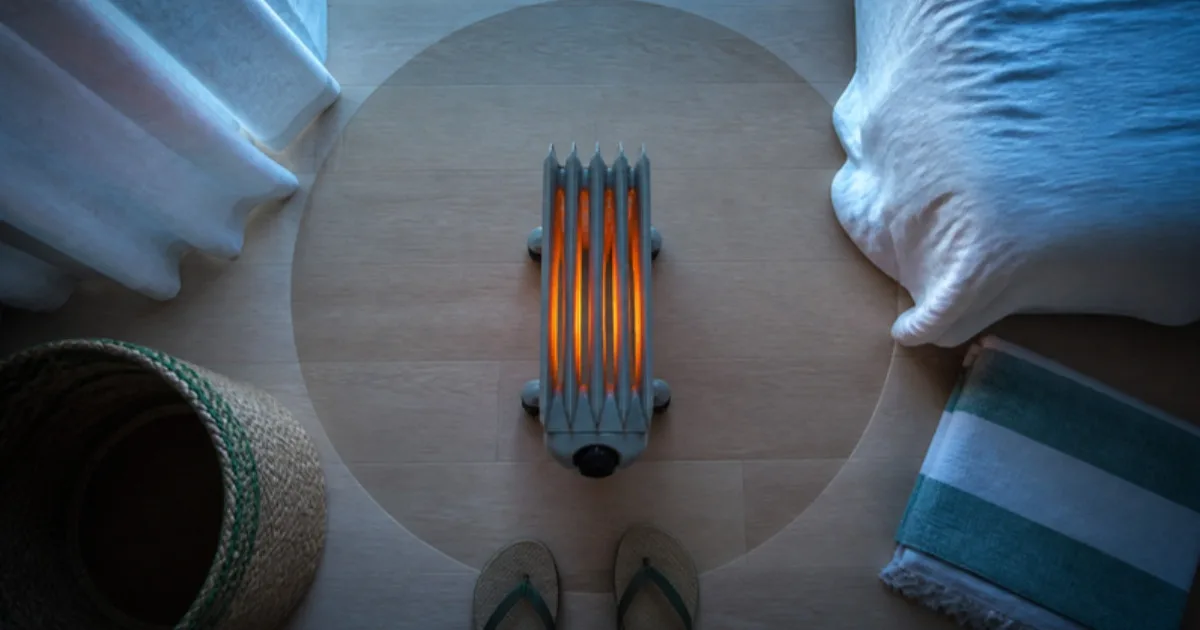
Keep it at least 3 feet away from anything that can burn. That includes curtains, bedding, sofas, clothing, paper, rugs that are not designed for heat, and holiday decorations. NFPA recommends that 3 foot clearance for all heating equipment, and it applies to the little ceramic heater under your desk as much as it does to a fireplace.
A few space heater safety placement rules go along with it:
- Put it on a hard, flat, level floor. Not on a rug that can bunch up, not on a table, and not on a chair.
- Keep it out of walkways where kids, pets, or guests can bump it or trip over the cord.
- Keep the cord out from under rugs and furniture. A cord that gets pinched or covered can overheat where you cannot see it.
- Never use a space heater to dry clothes, towels, or shoes. That is one of the most common ways they start fires.
- Keep it away from water unless the heater is specifically rated for bathroom use.
In smaller Panama City Beach bedrooms and condos, 3 feet of clear space can be hard to find. If you cannot keep that clearance, space heater safety says it is the wrong spot for a heater.
Can you plug a space heater into an extension cord or power strip?
No. Plug a space heater directly into a wall outlet. This is one of the most important space heater safety rules, and it is the one we see broken most often.
A typical plug-in electric space heater draws up to 1,500 watts on its high setting. On a standard 120 volt household circuit, that works out to about 12.5 amps, which is most of what a common 15 amp circuit can carry. Most household power strips and light-duty extension cords are not built for that kind of steady load. They heat up at the plug, the strip, or anywhere the cord is coiled, and that heat can melt insulation and start a fire.
The same logic is why a space heater so often trips a breaker. If that heater shares a circuit with a TV, a computer, a hair dryer, or a coffee maker, the total load goes over what the breaker allows, and it shuts off. That is the breaker doing its job.
Warning signs at the outlet
For space heater safety, stop using the heater on that outlet and call an electrician if you notice:
- The outlet cover, plug, or wall plate feels hot to the touch
- Brown or black discoloration around the outlet
- A burning or melting smell near the outlet
- The plug fits loosely or falls out of the outlet
- Lights flicker or dim when the heater kicks on
- The same breaker trips every time the heater runs
A loose or worn outlet under a heavy load like a space heater is a real fire risk, and it is a quick, inexpensive fix for a licensed electrician.
Which type of space heater is safest?
For space heater safety in most homes, a modern electric space heater with tip-over and overheat protection, certified by a recognized testing lab, is the safest choice. Fuel-burning heaters that run on propane or kerosene bring a carbon monoxide risk that electric heaters do not.
| Heater type | How it heats | Best for | Space heater safety notes |
|---|---|---|---|
| Ceramic fan heater | Fan blows air across a heated ceramic element | Quick warmth in a small room or office | Look for tip-over and overheat shutoff; keep the intake clear of dust |
| Oil-filled radiator | Heats sealed oil that warms the room slowly | Bedrooms and steady overnight warmth | Surface gets hot but no exposed element; still needs 3 feet of clearance |
| Infrared or quartz | Heats people and objects directly | Spot heating a chair or desk | Exposed elements run very hot; keep well away from fabric |
| Propane or kerosene (unvented) | Burns fuel inside the room | Not recommended indoors in most homes | Carbon monoxide risk; many are made for outdoor or job site use only |
Features worth paying for
- Tip-over switch. Shuts the heater off if it is knocked over.
- Overheat protection. Shuts it off if internal parts get too hot.
- A safety certification mark from a recognized testing lab on the heater and its cord.
- A thermostat, so the heater cycles instead of running full blast all night.
- A cool-touch housing if you have kids or pets.
Why fuel-burning heaters are a different story
An unvented propane or kerosene heater burns fuel inside the room and releases the exhaust there too. That can include carbon monoxide, which has no smell or color. The Consumer Product Safety Commission reports that more than 200 people in the United States die each year from accidental non-fire carbon monoxide poisoning linked to consumer products. If you use any fuel-burning appliance indoors, install carbon monoxide alarms on every level and outside sleeping areas. Our guide to the signs of a gas leak at home explains the difference between a gas leak and carbon monoxide.
Is it safe to leave a space heater on overnight?
We recommend against it. Good space heater safety means the safest habit is to turn the heater off when you leave the room and when you go to sleep, and to warm the bedroom before bed instead.
If you truly need overnight heat in one room, an oil-filled radiator with a thermostat, tip-over switch, and overheat protection is the better choice, placed at least 3 feet from the bed and bedding and plugged directly into a wall outlet. Even then, it is worth asking why one room is that cold. A bedroom that cannot stay warm usually points to a duct problem, a closed or blocked register, or a heat pump that is struggling.
Space heater safety in vacation rentals and guest rooms
If you own a rental in Panama City Beach or host family over the holidays, space heater safety needs a little extra planning because guests do not know the house.
- Leave only heaters with tip-over and overheat protection.
- Post a short card near the heater with the basics: 3 feet of clearance, wall outlet only, off when you leave.
- Make sure the outlet you expect guests to use is on a circuit that is not already loaded with a microwave, coffee maker, or hair dryer.
- Test smoke alarms and carbon monoxide alarms before the season starts.
- Remove any heater with a damaged cord or plug instead of trusting a guest to notice.
When a space heater is covering for a bigger problem
Space heater safety also means a heater should be a comfort extra, not your main heat. If you are running one every cold night just to feel normal, the real issue is usually the heating system or the ductwork.
Common reasons a room stays cold in a Bay County home:
- A heat pump that is low on refrigerant or has a failing part. Our guide on why a heat pump is not heating in Panama City Beach covers what is normal on a cold morning.
- Leaky or crushed ducts in a hot attic that lose warm air before it reaches the room.
- A dirty air filter that chokes airflow.
- Heat strips that are not coming on when the heat pump needs backup.
- A room addition or converted garage that was never properly connected to the system.
If you just switched the heat on and noticed a smell, our post on a burning smell from furnace vents explains which smells are normal and which are not.
A space heater that keeps tripping the same breaker can also point to an electrical system that is out of room. If your home has an older panel, frequent trips, or warm breakers, read the signs you need an electrical panel upgrade.
A quick space heater safety checklist
Run through this space heater safety list each time the heaters come out of the closet:
- Inspect the cord and plug for fraying, cracks, or melting.
- Confirm the tip-over switch works by gently tilting the heater while it runs.
- Vacuum dust from the intake and grille.
- Choose a spot with 3 feet of clearance on a hard, level floor.
- Plug it directly into a wall outlet that is not shared with other big loads.
- Feel the plug and outlet after 15 minutes. Warm is fine. Hot is not.
- Turn it off when you leave the room or go to bed.
- Test smoke and carbon monoxide alarms.
Frequently asked questions
What are the most important space heater safety rules?
Good space heater safety starts with three rules: keep the heater at least 3 feet from anything that can burn, plug it directly into a wall outlet, and turn it off when you leave the room or go to sleep. Choose a model with tip-over and overheat shutoff and a safety certification mark. Never use a space heater to dry clothes, and keep cords out from under rugs and furniture.
Can I plug a space heater into a power strip?
No. A typical electric space heater draws up to 1,500 watts, which is a heavy, steady load for most power strips and light-duty extension cords. They can overheat and start a fire. Plug the heater directly into a wall outlet, and avoid running other large appliances on the same circuit at the same time.
Why does my space heater keep tripping the breaker?
A 1,500 watt heater draws about 12.5 amps, which is most of a standard 15 amp circuit. If the same circuit also powers a TV, computer, or hair dryer, the total load goes over the limit and the breaker trips. Move the heater to an outlet on a less busy circuit. If the breaker still trips, have an electrician check it.
Is it safe to leave a space heater on overnight?
It is safest not to, and it is one of the simplest space heater safety habits. Turn the heater off before you go to sleep and warm the room beforehand instead. If you need overnight heat, use an oil-filled radiator with a thermostat, tip-over switch, and overheat protection, placed at least 3 feet from the bed. A bedroom that will not stay warm usually means the heating system needs service.
What type of space heater is safest?
For most homes, an electric heater with tip-over and overheat protection and a recognized safety certification is safest. Oil-filled radiators are a good choice for bedrooms because they have no exposed element. Unvented propane and kerosene heaters burn fuel indoors and carry a carbon monoxide risk, so they are a poor fit for most living spaces.
How far should a space heater be from a bed or curtains?
At least 3 feet. The National Fire Protection Association recommends keeping anything that can burn at least 3 feet away from heating equipment. That includes bedding, curtains, furniture, clothing, paper, and decorations. In a small room where you cannot keep that clearance, choose a different spot or a different way to warm the space.
Can a space heater cause carbon monoxide poisoning?
Electric space heaters do not produce carbon monoxide because they do not burn fuel. Propane and kerosene heaters do, and unvented models release exhaust into the room. If you use any fuel-burning heater or appliance, install carbon monoxide alarms on every level of the home and outside sleeping areas, and follow the manufacturer’s rules for indoor use.
Is it safe to use a space heater in a bathroom?
Only if the heater is specifically rated for bathroom or damp locations, and only when it is plugged into a GFCI protected outlet. Water and a standard space heater are a dangerous mix. Keep the heater well away from the tub, shower, and sink, and never touch it with wet hands.
Does a space heater save money compared to running the heat pump?
It can, if you only need to warm one small room for a short time and keep the rest of the house cooler. Running several heaters for hours often costs more than letting a working heat pump do the job. If you rely on space heaters every cold night, it usually pays to have the heat pump or ductwork checked.
What are the signs a space heater outlet is unsafe?
Watch for an outlet, plug, or wall plate that feels hot, brown or black marks around the outlet, a burning smell, a loose plug, flickering lights when the heater starts, or a breaker that trips every time. Stop using that outlet and have a licensed electrician inspect it. A worn outlet under a heavy load is a fire risk.
Get your heat and wiring ready for the cold snaps
Good space heater safety starts with a heating system you can trust and outlets that can handle the load. Frank Wood & Son Services is a family-owned, Veteran-owned, licensed and insured company serving Panama City Beach and Bay County since 1985. Our electricians repair warm or worn outlets, add dedicated circuits, and check panels that keep tripping, and our technicians service heat pumps and furnaces so you need fewer space heaters to begin with. See our electrical services in Panama City Beach and our heating services.
Call (850) 234-2168 or request a visit online. We offer 24/7 emergency service, so if an outlet smells hot or a breaker will not reset, you can reach us any hour.