What Can You Put in a Garbage Disposal Before Thanksgiving?
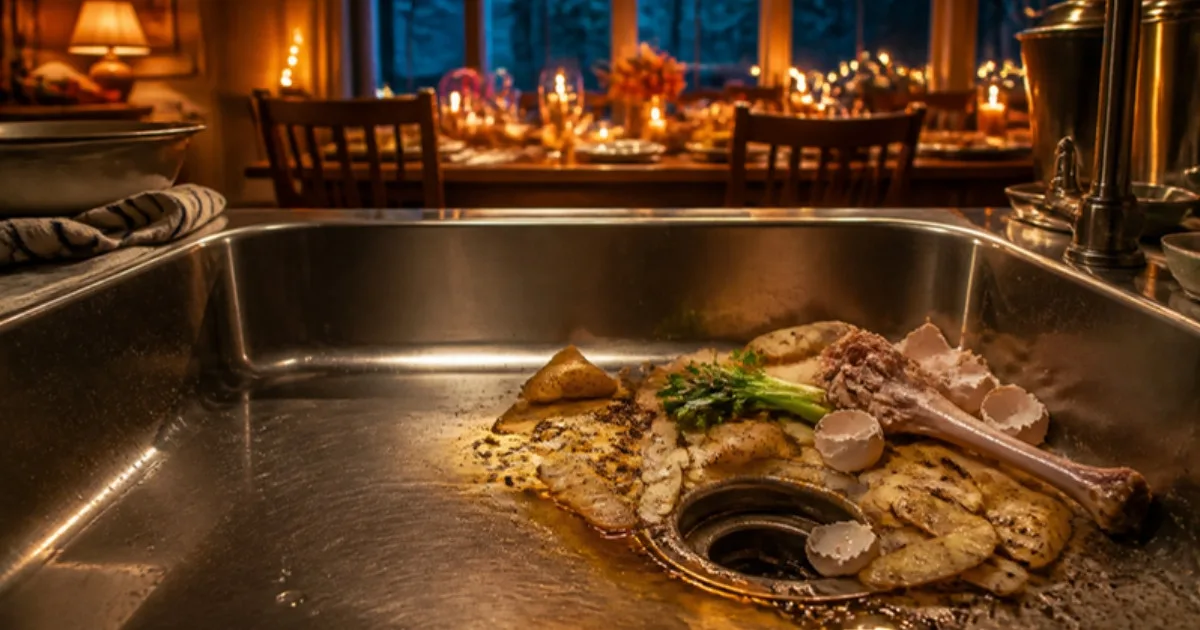
The day after Thanksgiving is one of the busiest days of the year for plumbers, and the reason is sitting under the kitchen sink. A full house, a long day of cooking, and a garbage disposal that gets fed everything from potato peels to turkey grease add up to a clogged kitchen drain at the worst possible time. So what can you put in a garbage disposal, and what should you scrape into the trash instead? Getting that right keeps your holiday from ending with a sink full of standing water.
What can you put in a garbage disposal? Small, soft food scraps run with plenty of cold water; grease, fibrous peels, starchy foods, bones, and coffee grounds belong in the trash.
This guide covers the safe list, the problem list, the Thanksgiving foods that cause the most trouble, and what to do if the disposal jams or the sink backs up with guests in the house.
What can you put in a garbage disposal?
Short answer: small, soft scraps. A garbage disposal is built to grind small amounts of soft food waste into tiny particles that wash down the drain with water. It is not a trash can, and it is not designed to handle a whole holiday meal’s worth of scraps at once.
On a normal day, the safe list looks like this:
- Small soft food scraps left on plates after eating
- Cooked vegetables in small amounts, cut into small pieces
- Most soft fruit scraps, such as melon rind cut into small pieces or bits of berries
- Small amounts of cooked meat scraps, with no bones
- Bread crusts and soft leftovers in small amounts
- Ice cubes now and then, which can help knock loose buildup on the grinding parts
- Small citrus peel pieces occasionally, which help freshen the smell
The rule behind every item on that list is the same: feed it slowly, a little at a time, with a steady stream of cold water running before, during, and for about 15 to 30 seconds after.
What can you put in a garbage disposal with the hot tap running? Nothing. Use cold water every time. It keeps any fats in the food solid so they can be chopped up and carried away, instead of melting, coating the pipe, and hardening farther down the line.
What not to put down garbage disposal drains
What can you put in a garbage disposal is a short list. The list of things to keep out is the one that causes most of the service calls. If you only remember one part of this post, make it this section on what not to put down garbage disposal drains.
| Item | Why it causes trouble | Where it should go |
|---|---|---|
| Grease, oil, and fat | Coats pipes, cools, and hardens into a clog | A sealed container in the trash |
| Potato peels | Starch turns into a thick paste that sticks | Trash or compost |
| Celery, onion skins, corn husks | Long fibers wrap around the grinding parts | Trash or compost |
| Pasta, rice, and stuffing | Swell with water and pack the trap | Trash |
| Coffee grounds | Settle in the trap like wet sand | Trash or compost |
| Eggshells | The membrane wraps parts and the grit packs the line | Trash or compost |
| Bones and turkey carcass | Too hard to grind and can jam the unit | Trash |
| Fruit pits and seeds | Too hard to grind | Trash |
| Large amounts of anything | Overwhelms the unit and the drain | Spread it out or use the trash |
Can you put grease down the garbage disposal?
No. This is the most common question we hear around the holidays, and the answer is always the same. Grease, oil, butter, and pan drippings may pour out as a liquid, but they cool and harden inside the drain line. Running hot water and dish soap only moves the problem a little farther down the pipe before it sets up again.
The City of Panama City Beach Utilities Department asks residents to pour cooled fats, oils, and grease into a covered container for the trash, scrape plates into the garbage before washing, wipe greasy pans with a paper towel, and use sink strainers to catch food scraps. Those four habits do more to protect your kitchen drain than any product you can pour into it.
The Thanksgiving foods that cause the most trouble
What can you put in a garbage disposal on Thanksgiving? Honestly, less than usual. The holiday menu is loaded with the exact foods that clog drains.
Potato peels
Mashed potatoes mean a big pile of peels, and peels are one of the worst things to send down the drain. The starch breaks into a thick, gluey paste that settles in the trap and the pipe. A few peels may go through, but a five pound bag’s worth can stop a drain cold.
Turkey grease and pan drippings
Every roasting pan comes with drippings. Let them cool, pour them into an old can or jar with a lid, and put the container in the trash. Wipe the pan with a paper towel before it goes into the sink.
Celery, onions, and green beans
Stuffing and casseroles use a lot of celery and onion. The stringy fibers and thin onion skins wrap around the spinning parts inside the disposal and catch other debris.
Stuffing, rice, and pasta
Bread-based stuffing, rice dishes, and leftover noodles soak up water and swell. Sent down the drain in quantity, they pack the trap like cement.
The turkey carcass
Bones do not belong in a home disposal. Save the carcass for stock or put it in the trash.
How to use a garbage disposal on a busy cooking day
What can you put in a garbage disposal on a busy day? The same small scraps, just spread out. You do not have to give up the disposal for the holiday. You just have to use it the way it was designed to be used.
- Scrape the big stuff into the trash first. Keep a bowl or a lined bin next to the sink for peels, fat, bones, and large scraps.
- Run cold water before you turn the disposal on. Let it run for a few seconds first.
- Feed scraps slowly, a small handful at a time, instead of packing the chamber.
- Keep the water running for 15 to 30 seconds after the grinding sound stops, so the waste clears the trap.
- Do not run the dishwasher and the disposal at the same moment if your kitchen drain has been slow. Give each a turn.
- Spread the load across the day. A few small batches are much easier on the drain than one big dump after dinner.
What can you put in a garbage disposal on a septic system? Even less. If your home is on a septic system, which some properties in Bay County are, go even lighter. Food waste adds solids to the tank and can shorten the time between pump-outs.
What to do if your garbage disposal stops working
A disposal that hums but does not spin, or one that does nothing at all, is a common sight the night of Thanksgiving. A few safe steps can sometimes get it going again.
If it hums but will not spin
That usually means something is jammed. Turn the disposal off at the wall switch and, if you can, unplug it under the sink or switch off its breaker. Never put your hand inside the disposal. Many models have a small hex socket on the bottom of the unit. Turning it back and forth with the wrench that came with the disposal can free a jam. Remove any loose object with tongs, not your fingers.
If it does nothing at all
Look for the red reset button on the bottom of the unit. Wait a few minutes for the motor to cool, press the reset button, and try again with cold water running. If it still does nothing, check whether a breaker or a GFCI outlet under the sink has tripped.
If the sink is backed up
Do not pour chemical drain cleaners into a disposal or a sink full of standing water. They can damage the disposal, the pipes, and your skin, and they make the job more dangerous for whoever has to open the drain later. A plunger made for sinks can help on a simple clog. If both sides of a double sink are full, or water is coming up in the dishwasher, the clog is likely past the trap and needs a plumber.
Signs your garbage disposal needs repair or replacement
Even with careful use, disposals wear out. Watch for these signs:
- Frequent jams, even with light use
- A leak under the sink, especially from the bottom of the unit
- A constant bad smell that cleaning does not fix
- Water draining slowly from the disposal side only
- The reset button tripping again and again
- Loud grinding or rattling after anything solid has been cleared out
A leak at the bottom of the disposal usually means the internal seals have failed, and that unit typically needs replacement rather than repair. Water sitting in the cabinet for days can damage the floor and the cabinet base without anyone noticing. Our guide to the signs of a hidden water leak explains what to watch for elsewhere in the house.
When the problem is the drain line, not the disposal
Sometimes the disposal is fine and the trouble is farther down. Years of grease, starch, and soap scum build up on the inside of the kitchen drain line until it narrows to a fraction of its size. Then a big cooking day pushes it over the edge.
If your kitchen drain clogs every holiday, or keeps slowing down a few weeks after it is cleared, the line may need professional cleaning, or in older homes a closer look at the pipe itself. Our post on pipe lining vs repiping covers the options when an older drain line keeps causing problems.
Frequently asked questions
What can you put in a garbage disposal safely?
Small, soft food scraps are safe, fed a little at a time with cold water running. That includes plate scraps, small pieces of cooked vegetables, soft fruit scraps, and small bits of boneless cooked meat. Keep the water running for 15 to 30 seconds after grinding. Grease, peels, starches, and bones go in the trash.
Can you put grease down the garbage disposal if you run hot water?
No. Hot water and dish soap only move grease a little farther down the pipe, where it cools and hardens into a clog. Let grease and pan drippings cool, pour them into a sealed container, and throw it in the trash. Wipe greasy pans with a paper towel before washing them in the sink.
Can you put potato peels in a garbage disposal?
It is best not to. Potato peels release starch that forms a thick paste, which settles in the trap and the drain line. A few small pieces may pass, but a holiday batch of peels is one of the most common causes of Thanksgiving clogs. Put peels in the trash or compost instead.
Are coffee grounds bad for a garbage disposal?
Yes. Coffee grounds do not dissolve. They settle in the trap and pipe like wet sand and build up over time, especially when mixed with grease. A small amount now and then may not cause an immediate problem, but a daily habit can lead to a slow or blocked kitchen drain. Toss grounds in the trash or compost.
Can you put eggshells in a garbage disposal?
It is better to skip them. The thin membrane inside eggshells can wrap around the grinding parts, and the ground shell turns into a fine grit that packs into the drain along with other debris. On a heavy baking day with dozens of eggs, eggshells add up quickly. Put them in the trash or compost.
Is it okay to put ice in a garbage disposal?
Yes, occasionally. A handful of ice cubes run with cold water can help knock loose buildup from the grinding parts and the inside of the chamber. Ice does not sharpen the parts, but it can help clean them. Do not overload the unit, and run cold water for several seconds afterward.
Why does my garbage disposal hum but not spin?
A humming disposal that does not spin is usually jammed. Turn it off and cut the power at the switch or breaker. Use the hex wrench in the socket on the bottom of the unit to work the parts loose, and remove any object with tongs, never your hand. If it still hums after that, the motor may be failing.
Should I use drain cleaner on a clogged garbage disposal?
No. Chemical drain cleaners can damage the disposal, the seals, and the pipes, and they create a hazard for anyone who has to open the drain afterward. Try a sink plunger on a simple clog. If both sides of the sink are backed up or water appears in the dishwasher, call a licensed plumber instead.
How long does a garbage disposal last?
Many home garbage disposals last around 8 to 15 years, depending on the model, how heavily it is used, and what goes into it. Frequent jams, leaks from the bottom of the unit, constant odors, or a reset button that keeps tripping are signs it may be near the end. A plumber can tell you whether repair or replacement makes more sense.
What should I do if my kitchen sink backs up on Thanksgiving?
Stop running water and the dishwasher, and do not pour in chemicals. Try a sink plunger if only one side is full. If both sides are backed up, water rises in the dishwasher, or the clog returns after plunging, the blockage is likely past the trap. Frank Wood & Son Services offers 24/7 emergency service in Panama City Beach for exactly this situation.
Sink backed up with a house full of guests? Call a local plumber
What can you put in a garbage disposal on a holiday? Small scraps, slowly, with cold water. Follow that and the kitchen drain usually keeps running. When it does not, Frank Wood & Son Services can help. We are a family-owned, Veteran-owned, licensed and insured plumbing company serving Panama City Beach and Bay County since 1985. Our plumbers clear kitchen drain clogs, repair and replace garbage disposals, and fix leaks under the sink, with a clear estimate before any work begins. See our plumbing services in Panama City Beach.
Call (850) 234-2168 or request service online. We offer 24/7 emergency service, including holiday weekends, so a clogged sink does not have to wait until Monday.