
Signs of a Hidden Water Leak in Your Bay County Home
Most hidden leaks in Bay County homes get found the same way. The water bill jumps, nobody can explain it, and the house looks perfectly dry. The sooner you spot it, the more likely it is still a repair and not a remodel.
The signs of a hidden water leak include an unexplained high water bill, a meter that moves when no water is running, warm or damp floor spots, musty odors, stains, and low water pressure.
Gulf Coast homes give leaks plenty of places to hide. Slab foundations with lines underneath, supply lines in hot attics, irrigation systems, and vacation homes that sit empty for weeks all let a small drip run a long time.
Frank Wood & Son Services has fixed leaks in Panama City Beach and Bay County since 1985. Here is what to look for.
How much water can a hidden leak waste?
A hidden leak can waste thousands of gallons a year without ever showing a puddle, because it runs around the clock.
According to the EPA’s WaterSense Fix a Leak Week page, household leaks waste nearly 1 trillion gallons of water a year nationwide. The average household’s leaks can waste more than 9,300 gallons a year. About 9 percent of homes have leaks wasting 50 gallons or more per day.
More numbers from the same source:
- A faucet dripping once per second wastes more than 3,000 gallons a year.
- An irrigation leak just 1/32 inch in diameter can waste about 6,300 gallons a month.
- Fixing easy household leaks can save about 10 percent on water bills.
Those are the easy leaks. The signs of a hidden water leak behind walls, under slabs, and in attics are harder to spot, which is exactly why those leaks last longer.
What are the most common signs of a hidden water leak?
The most common signs of a hidden water leak are a water bill that jumps without explanation, a water meter that moves when everything is off, and moisture or odors with no visible source. One sign is worth checking out. Two or more is worth a call.
A high water bill you cannot explain
This is the number one clue among the signs of a hidden water leak. If your usage, guests, and irrigation schedule have not changed but the bill keeps climbing, water is going somewhere.
Sounds of running water
Listen when the house is quiet. A faint hiss or trickle inside a wall or under the floor, with every fixture off, is one of the clearest signs of a hidden water leak.
Damp spots, stains, and warped materials
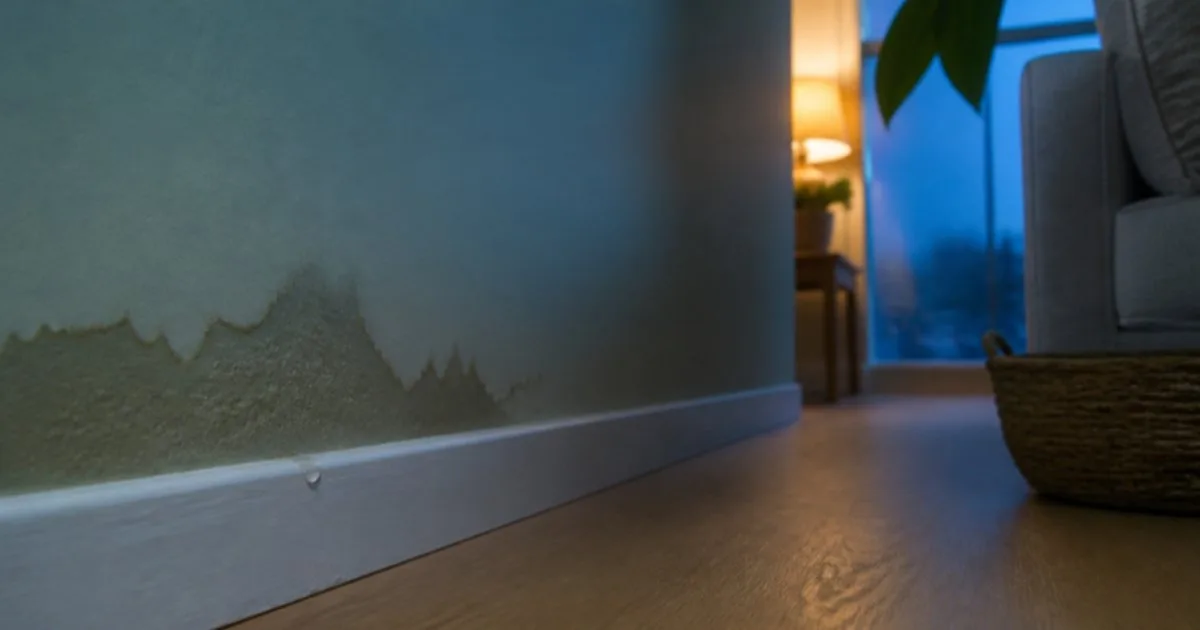
Look for drywall stains, bubbling paint, cupped flooring, and swollen baseboards. Ceiling stains under an attic water line are common here.
Musty smells and mold
A musty odor that stays in one room or closet, or mold that keeps coming back in the same spot, usually means water is feeding it.
Low water pressure
Low pressure is one of the quieter signs of a hidden water leak. If pressure drops across the house and nothing else changed, some water may be escaping before it reaches the faucet.
What are the signs of a slab leak?
A slab leak is a leak in a water line running under or inside a concrete foundation. The classic signs are a warm spot on the floor, the sound of running water near the floor, damp carpet or flooring with no source, and cracks in tile or flooring.
Slab-on-grade construction is common across Bay County, so the signs of a hidden water leak under concrete deserve their own section.
- Warm floor spots. A leak on a hot water line can make one patch of floor feel noticeably warm under bare feet.
- Wet or damp flooring. Carpet pad that stays damp, or water seeping at the edge of the floor, with no plumbing fixture nearby.
- Hairline cracks. New cracks in tile or a section of flooring that lifts.
- A water heater that runs constantly. If hot water is leaking under the slab, the heater keeps refilling and reheating.
A water heater running more than normal can point to a hidden hot water leak, not a failing heater. Our post on how long water heaters last covers the signs of a heater that is actually wearing out, which helps you tell the two apart.
Not every warm spot is a slab leak, since sunny windows can fool you. If you find one, run the meter test below before assuming the worst.
How do you do a water meter leak test?
A water meter leak test checks for hidden leaks by shutting off all water in the house and watching the meter. If the meter moves while nothing is running, water is leaking somewhere.
Once you notice the signs of a hidden water leak, this is the most useful test you can run. It costs nothing and takes about an hour.
- Find your water meter. In most Bay County neighborhoods it sits in a covered box near the street or property line.
- Turn off every fixture, including the ice maker and the irrigation system.
- Read the meter. Many meters have a small leak indicator, often a triangle or star, that spins when any water flows.
- Wait without using water. Give it at least 30 minutes, longer if you can.
- Read it again. If the leak indicator moved or the numbers changed, you have a leak.
- Close the main shutoff valve to the house and check again. If the meter still moves, the leak is likely between the meter and the house. If it stops, the leak is inside the house.
A water meter leak test does not tell you where the leak is, only whether there is one and roughly which side of the shutoff it is on.
How do you check a toilet for a leak?
A toilet dye test finds a leaking flapper by putting a few drops of food coloring in the tank and waiting about 15 minutes without flushing. If color shows up in the bowl, the toilet is leaking.
Toilets are one of the most common silent leaks, and they rarely show the usual signs of a hidden water leak. A worn flapper lets water trickle into the bowl all day.
- Take the lid off the tank.
- Add a few drops of dark food coloring to the tank water.
- Do not flush for 15 to 20 minutes.
- Look in the bowl. Any color means the flapper or seal is leaking.
A new flapper is often a simple fix. Test every toilet, including the guest bath nobody uses.
Where do hidden leaks hide in Gulf Coast homes?
In Bay County homes, hidden leaks most often hide under the slab, in attic supply lines, in irrigation systems, inside walls behind showers and sinks, and at appliance connections.
Use this table to match the signs of a hidden water leak to the most likely source.
| Leak location | Common clues | Why it happens here |
|---|---|---|
| Under the slab | Warm floor spots, damp flooring, high water bill | Slab-on-grade homes run lines under concrete |
| Attic supply lines | Ceiling stains, drips at light fixtures | Lines run through attics that get extremely hot |
| Irrigation system | Soggy patches in the yard, meter moving with house valve closed | Sprinklers run year-round in our mild climate |
| Inside walls | Stained drywall, bubbling paint, musty smell | Shower valves and supply connections wear over time |
| Appliances | Water under the fridge, washer, or water heater | Hoses and fittings age and loosen |
| Older pipe | Discolored water, repeated pinhole leaks | Older galvanized and copper lines wear thin |
Freezes are rare here, but the January 2025 Panhandle storm showed that exposed pipes can crack, and a split attic line may not show itself until the thaw. Our guide on how to prevent frozen pipes in Florida covers the basics.
Vacation homes and second homes
A leak in a house nobody is living in can run for weeks, because nobody is there to notice the signs of a hidden water leak. If your beach place sits empty, shut off the main valve when you leave, have someone check the meter between visits, and watch the bill closely.
Why do hidden leaks cause mold so fast in Bay County?
Hidden leaks cause mold fast here because our humidity keeps wet materials from drying out on their own. The EPA says mold generally will not grow if wet materials are dried within 24 to 48 hours, and a hidden leak never gives them that chance.
That is the real cost of ignoring the signs of a hidden water leak. The EPA’s brief guide to mold, moisture, and your home lays out why fixing the water source comes first.
After a leak is fixed, our post on how to reduce indoor humidity explains how to keep moisture down while things dry.
When should you call a plumber for leak detection?
Call a plumber for leak detection when your meter test shows a leak you cannot find, when you see signs of a slab leak, or when water damage is showing up on walls, floors, or ceilings.
Not all signs of a hidden water leak need a pro. A dripping faucet or a bad toilet flapper is a reasonable weekend fix.
Call when the signs of a hidden water leak point somewhere you cannot reach:
- The meter keeps moving and you cannot find a visible source.
- You suspect a slab leak.
- Your water bill keeps rising month after month.
- You have repeat pinhole leaks in older pipe.
Frank Wood & Son Services uses non-invasive electronic and acoustic leak detection to pinpoint the spot before we open a wall or floor, which means a smaller repair.
Some leaks are a simple pipe repair. If older pipe keeps failing, repiping with copper, PEX, or PVC may be the better long-term answer, and pipe lining can sometimes repair a line from the inside. We will tell you honestly which makes sense.
Frequently asked questions
What are the first signs of a hidden water leak?
The first signs of a hidden water leak are usually a water bill that jumps without explanation and a water meter that moves when nothing in the house is running. Close behind are musty smells, stains on drywall or ceilings, warm spots on the floor, and lower water pressure. If you notice any of these, run a meter test before anything else.
How can I tell if I have a slab leak?
Common slab leak signs include a warm patch of floor, damp carpet or flooring with no nearby fixture, the sound of running water near the floor, new cracks in tile, and a water heater that runs more than usual. A water meter test can confirm a leak exists. A plumber with leak detection equipment can then pinpoint whether it is under the slab.
How long does a water meter leak test take?
Plan on about 30 minutes to an hour. Turn off every fixture and the irrigation system, read the meter, then wait at least 30 minutes without using any water. Read it again. If the leak indicator moved or the numbers changed, water is leaking somewhere. Closing the main house valve and repeating the test helps narrow down where.
Why is my water bill high when I do not see a leak?
A high water bill with no visible leak is one of the classic signs of a hidden water leak. It usually points to a silent toilet leak, an irrigation leak, or a hidden leak in a wall, attic line, or under the slab. Start with a toilet dye test on every toilet, then check the irrigation system, then run a meter test. If the meter still moves, call a plumber for leak detection.
Can a hidden leak cause mold?
Yes, and mold that keeps returning is one of the signs of a hidden water leak. A hidden leak keeps building materials wet, and mold grows quickly in Bay County humidity. The EPA says mold generally will not grow if wet materials are dried within 24 to 48 hours, but a hidden leak keeps them wet for weeks. Stopping the leak comes first. Cleaning mold without fixing the water source fails.
How much water does a small leak waste?
More than most people expect. The EPA says a faucet dripping once per second wastes more than 3,000 gallons a year, and the average household’s leaks can waste more than 9,300 gallons a year. An irrigation leak just 1/32 inch in diameter can waste about 6,300 gallons a month. Small leaks add up because they never stop running.
Does homeowners insurance cover hidden water leaks?
It depends entirely on your policy. Some policies cover sudden water damage but exclude slow leaks or the cost of repairing the pipe itself. Call your insurance agent and ask how your policy treats hidden leaks, slab leaks, and resulting mold, and keep records of what you found and when.
How do plumbers find hidden leaks without tearing up walls?
Once you have noticed the signs of a hidden water leak, plumbers use non-invasive leak detection tools to find it. Frank Wood & Son Services uses electronic and acoustic leak location, which pinpoints escaping water through walls, floors, and slabs. Finding the exact spot first means opening only a small area for the repair.
Should I shut off the water at my vacation home?
For most vacation homes and second homes that sit empty, shutting off the main valve when you leave is a smart move. A hidden leak in an empty house can run for weeks before anyone notices. If you rent the place out or need irrigation running, have someone check the meter between visits and watch your water bill closely.
Are the signs of a hidden water leak different in older homes?
Mostly the same, with a few extras. In older Bay County homes, discolored water, repeated pinhole leaks, and low pressure can point to aging galvanized or copper pipe wearing thin. If leaks keep showing up in different places, the pipe itself may be the problem, and repiping or pipe lining could be the better long-term fix.
Spotted the signs of a hidden water leak? Get it found before it spreads
If your meter is moving, your bill keeps climbing, or you are seeing any of the signs of a hidden water leak in this post, do not wait for it to show up on your ceiling. Frank Wood & Son Services is a family-owned, Veteran-owned plumbing company, licensed and insured, serving Panama City Beach and Bay County since 1985, with 24/7 emergency service when water is actively getting into your home.
Learn more about our leak detection, repair, and repiping on our plumbing services page, or schedule a leak detection visit online. You can also call us at (850) 234-2168.