How to Reduce Indoor Humidity in a Gulf Coast Home
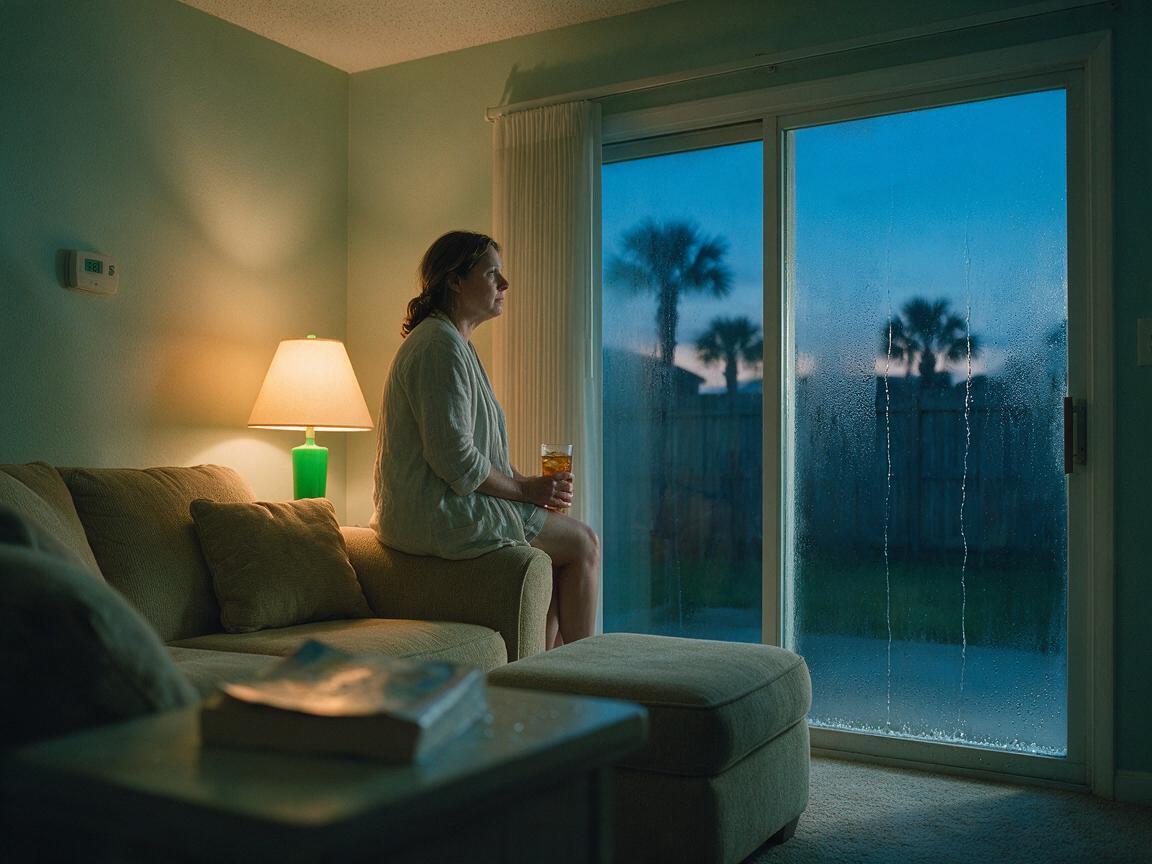
It is the second week of October, the thermostat reads 74, and the house still feels like the inside of a cooler. The bottom edge of the sliding glass door is beaded with water. The guest closet smells like an old boat cover. Nothing is broken, exactly, but nothing feels right either.
On the Gulf Coast that is a moisture problem, not a temperature problem, and the two get confused constantly. Learning how to reduce indoor humidity is the highest-value comfort fix available to a Panama City Beach homeowner, and most national advice skips the coastal case entirely. This guide covers the target numbers, the oversized air conditioner trap that keeps half of Bay County clammy, and the order to work in when you want to reduce indoor humidity for good.
Start with the numbers you are aiming for
There is a published target, and it is not vague. The EPA recommends keeping indoor relative humidity below 60 percent, and ideally between 30 and 50 percent. When you reduce indoor humidity into that band, mold loses its footing, dust mites drop off, and 76 degrees starts to feel genuinely cool.
The EPA also gives a clock that matters: mold will usually not grow if wet material is dried within 24 to 48 hours. Read the EPA guide to mold, moisture, and your home once and the line that sticks is the one they lead with, that the key to mold control is moisture control.
To reduce indoor humidity means pulling indoor relative humidity down into the 30 to 50 percent range and holding it there, usually by making the air conditioner run longer rather than colder.
Buy a hygrometer before anything else. A twelve dollar digital unit from any hardware store in Panama City or Lynn Haven tells you in ten minutes whether you have a real problem. You cannot reduce indoor humidity that you are not measuring.
Why 72 degrees at 65 percent feels worse than 76 degrees at 45 percent
Comfort is not temperature alone. Your body cools itself by evaporating sweat, and evaporation slows as the air around you fills with moisture. At 65 percent relative humidity that process nearly stalls, so 72 degrees feels heavy and sticky. At 45 percent, evaporation works, and 76 degrees feels crisp.
This is why the instinct to drop the thermostat is the wrong move. A lower setpoint makes the system satisfy the thermostat faster, which means shorter run cycles, which means less moisture removal. The house gets colder and clammier at once, and the power bill climbs.
Reduce indoor humidity first and let the temperature ride higher. Most Bay County families who reduce indoor humidity into the 45 to 50 percent range end up raising the thermostat two or three degrees and liking the house better.
The oversized air conditioner trap
Here is the cause almost nobody has heard of, and it is the most common one in Panama City Beach. If your air conditioner is too large for the house, it cools the air so fast that it shuts off before it has time to pull water out of it. An oversized system cannot reduce indoor humidity no matter how new or how efficient it is.
Air conditioners do two jobs at once. Sensible capacity is the temperature drop you feel at the vent. Latent capacity is the water the system condenses out of the air and drains away. Latent removal only ramps up after the indoor coil has been cold and wet for a while, and that takes runtime.
A correctly sized system in a coastal climate runs long, steady cycles, often fifteen to twenty minutes, and drips a steady stream from the condensate line on a humid afternoon. An oversized system short cycles: seven minutes on, off, seven minutes on, off. The thermostat is happy. The house is a swamp.
Oversizing happens when a replacement is matched to the old unit’s tonnage instead of a fresh load calculation, or when someone assumes bigger is safer in Florida heat. ENERGY STAR is blunt in its heating and cooling guidance: proper sizing and quality installation matter as much as the equipment rating. Insist on a room-by-room load calculation before anyone quotes a tonnage.
Seven other reasons a Gulf Coast house stays damp
Sizing is the big one, but it is rarely alone. These are the issues that quietly cancel out every other attempt to reduce indoor humidity.
- A clogged or slimy condensate drain line. The water your system pulls from the air has to leave the building. Algae blocks the line, the pan backs up, and that standing water evaporates back into the return air.
- A dirty filter choking airflow. Low airflow freezes the coil, and a frozen coil removes no moisture at all. The Department of Energy recommends changing filters every month or two during cooling season and notes that swapping a clogged filter for a clean one can cut energy use by 5 to 15 percent.
- Duct leakage in a hot attic. A return duct with an open seam sits in a 130 degree attic and inhales moisture-loaded air all day. One leak can add more water than every shower in the house combined.
- A missing or failed vapor barrier. Homes on crawl spaces sit over damp sandy soil and a high water table. Without an intact ground barrier, the earth breathes moisture into the floor system continuously.
- Unsealed can lights and attic bypasses. Recessed lights, chases, and top plate gaps let conditioned air rise out and humid attic air fall in. Sealing them is cheap and it works.
- Exhaust fans that vent into the attic. More common than it should be. Every shower dumps a quart of water into the attic instead of outside, and it finds its way back down.
- An unbalanced or missing fresh air intake. Tight newer homes often have a fresh air duct with no damper, feeding raw Gulf air into the return on an August afternoon. It needs control, not a cap.
Coastal equipment has one extra strike: salt eats the outdoor coil fins and quietly steals capacity, which we cover in our post on salt air corrosion and your AC.
What your house is telling you
Each symptom points somewhere specific. Use this table to find your starting point, and to see whether the work to reduce indoor humidity is yours or a licensed technician’s.
| Symptom | What it usually means | Who fixes it |
|---|---|---|
| Musty or earthy smell | Microbial growth on a wet surface: drain pan, duct liner, crawl space, closet wall | Homeowner locates it, technician cleans coil, duct, or pan |
| Windows sweating on the inside | Indoor relative humidity well above 60 percent | Homeowner starts, technician if runtime is the cause |
| Water near the air handler | Blocked condensate drain line or a full pan | Homeowner wet vacs the outlet, technician for a real clog |
| Supply registers sweating | Humid air meeting cold metal, usually duct leaks or missing insulation | Licensed technician |
| Buckling or cupping wood floors | Sustained moisture in the slab or crawl space, often a failed vapor barrier | Licensed plumber or technician |
| Peeling paint or soft drywall | Long-term moisture, often a hidden leak or a bath fan venting into the attic | Homeowner inspects, pro repairs |
| Runs seven minutes and shuts off | Short cycling, usually oversizing or a control fault | Licensed technician |
Do this first: the fastest way to reduce indoor humidity
Work in this order. Each step is cheap, and each one rules out something expensive.
- Measure. Put a hygrometer in the main living area and a second in the worst-smelling room. Record morning and evening readings for three days.
- Change the filter. Use the least restrictive filter that meets your needs. A dense filter in an undersized return starves airflow.
- Check the condensate line. Confirm the PVC outlet outside drips during a run cycle. No water on a humid day means no moisture removal.
- Flush the drain line. A cup of distilled vinegar down the cleanout tee, monthly, keeps biofilm down and helps reduce indoor humidity all season.
- Raise the thermostat two degrees. Longer cycles reduce indoor humidity faster than colder settings do. Give it 48 hours.
- Verify every exhaust fan terminates outside. Look for a vent cap on the roof or soffit, not a duct disappearing into insulation.
- Time a cooling cycle. Under ten minutes on a hot afternoon points straight at short cycling.
- Look at the crawl space or slab perimeter. Standing water, torn plastic, or damp soil is your answer.
Several of these overlap with our list of maintenance tasks you can do yourself to keep a system running well.
Fixes ranked by cost and impact
Spend from the top of this list down. Plenty of homes in Callaway and Parker reduce indoor humidity into range without buying equipment.
Free behavior changes. Run bath fans for 20 minutes after a shower, not five. Cover pots while cooking and keep the range hood on. Stop drying clothes indoors. Close windows on humid mornings, which here is most mornings. These alone can reduce indoor humidity by several points.
Low-cost fixes, roughly 20 to 400 dollars. Filter changes, drain line flushing, air sealing can lights and top plate gaps, a proper ground vapor barrier, sealing duct joints with mastic, and adding a damper to a fresh air intake. This tier is where most Bay County houses find their fix.
Equipment, roughly 1,200 dollars and up. A variable speed or two-stage system runs long and slow at part load, the exact condition that removes water, and it is the strongest structural way to reduce indoor humidity here. A whole-home dehumidifier ducted to the return covers the shoulder seasons when a house needs drying but not cooling, which is most of October and November. A smart thermostat with a dehumidify or overcool setpoint runs past the temperature target by a degree or two to reduce indoor humidity.
Our air conditioning services team runs load calculations and installs dehumidification, and the plumbing services side handles the condensate and vapor barrier work that often sits at the root of it.
How to reduce indoor humidity in a vacant second home or rental
Vacant weeks are when Panama City Beach houses grow mold. Nobody is there to smell it, the thermostat is set to save money, and three weeks later the closets are ruined.
Set the thermostat to 78 degrees, never higher, and never use the off or vacation-hold setting in warm months. Pair it with a humidistat or a smart thermostat set to 55 percent, configured to run on humidity alone even when the temperature target is met. That combination lets an empty house reduce indoor humidity without freezing a coil or running the bill up.
Leave interior and closet doors open, and pour a cup of water down every unused drain to keep traps sealed. For a property empty for months, a whole-home dehumidifier with a condensate pump costs less than one remediation. Owners in Mexico Beach and Panama City who added a remote humidity sensor catch a failure in hours instead of at the next turnover.
Frequently asked questions
What humidity level should I keep my house at in Florida?
Aim for 45 to 50 percent and treat 60 percent as a hard ceiling. The EPA recommends staying below 60 percent, ideally 30 to 50 percent. On the Gulf Coast, 45 to 50 percent is the sweet spot: it stops mold and dust mites without drying out wood floors, and it lets you keep the thermostat higher.
Does turning the AC colder reduce humidity?
No, and it usually makes things worse. A lower setpoint satisfies the thermostat faster, which shortens run cycles, and short cycles remove very little water. You get a cold, clammy house and a higher bill. Longer, steadier run times are what reduce indoor humidity, so raise the setpoint slightly and add dehumidification.
Why is my house humid even though the AC is running?
The most common reason is an oversized system that short cycles before it can remove moisture. Other frequent causes are a clogged condensate drain, a dirty filter restricting airflow, return ducts leaking humid attic air into the system, and bath fans venting into the attic. Time a cooling cycle: under ten minutes on a hot day points to short cycling.
Will a portable dehumidifier fix a whole house?
Rarely. A portable unit handles one room or one closet, and it needs emptying or a drain hose. To reduce indoor humidity across a whole Gulf Coast house, a dehumidifier ducted to the return air handles the entire volume, drains automatically, and runs on its own humidity setpoint rather than the thermostat.
How long does it take to dry out a humid house?
With the right equipment, readings usually drop noticeably within 24 to 48 hours and stabilize in about a week as drywall, carpet, and furniture release stored moisture. The EPA notes mold generally will not grow if wet material is dried within 24 to 48 hours, so speed matters more than most homeowners expect.
What should I set the thermostat to in an empty beach house?
Set it to 78 degrees with a humidistat or smart thermostat capped at 55 percent relative humidity, and never turn the system fully off in warm months. Leave interior and closet doors open for circulation. Add a remote humidity sensor with alerts so a failure gets caught in hours, not at the next turnover.
Ready to reduce indoor humidity for good?
If your house sits above 60 percent no matter what you do, the answer is usually sizing, runtime, ductwork, or drainage, and those take a licensed set of eyes. Frank Wood & Son Services has served Panama City Beach and Bay County since 1985, and our technicians run true load calculations, test duct leakage, and install the equipment and controls that reduce indoor humidity in coastal homes.
Call (850) 234-2168 or schedule a visit through our contact page. We are family-owned, Veteran-owned, licensed, insured, and available 24/7 for emergencies from Southport to Mexico Beach.