How Long Do Water Heaters Last, and 6 Signs Yours Is About to Go
Your water heater is the most-used appliance you never think about, right up until the morning it hands you a cold shower or you find a puddle spreading across the garage floor. By then your options are limited and your timeline is not your own.
The better move is to know roughly how much life your unit has left and to recognize the warning signs before they become a flood. So how long do water heaters last, and how do you tell when yours is on borrowed time? Here is what every Panama City Beach homeowner should know, including why our local water is harder on these units than most.
How long do water heaters last?
For a standard tank water heater, the typical lifespan is 8 to 12 years. A tankless unit can last 20 years or more with proper care. Those are national averages, though, and a few things push your real number up or down: water quality, how hard the unit works, whether it was sized correctly, and whether it has been maintained.
That last point matters most. A tank that is flushed once a year and has its anode rod checked can reach the top of its range. One that is ignored often fails years early. If you do not know how old yours is, find the serial number on the manufacturer’s label. The first letters and digits usually encode the month and year it was built, and the brand’s website can decode it.
6 signs your water heater is about to fail
Water heaters rarely die without warning. They tell you they are struggling. Watch for these six signs.
- The water is rusty or smells off. Brown or reddish hot water, or a metallic smell, often means rust inside the tank or a failing anode rod. Once a steel tank starts corroding from the inside, a leak is not far behind.
- You hear rumbling or popping. That sound is sediment that has hardened on the bottom of the tank. It forces the burner to work harder, drives up your energy bill, and accelerates wear. Sediment buildup is one of the top reasons a tank fails early.
- Hot water runs out faster than it used to. If showers that used to last ten minutes now go cold in four, sediment is stealing tank capacity or a heating element is failing.
- The water never gets hot enough. Lukewarm water can point to a broken thermostat, a failed heating element, or a unit that is simply worn out.
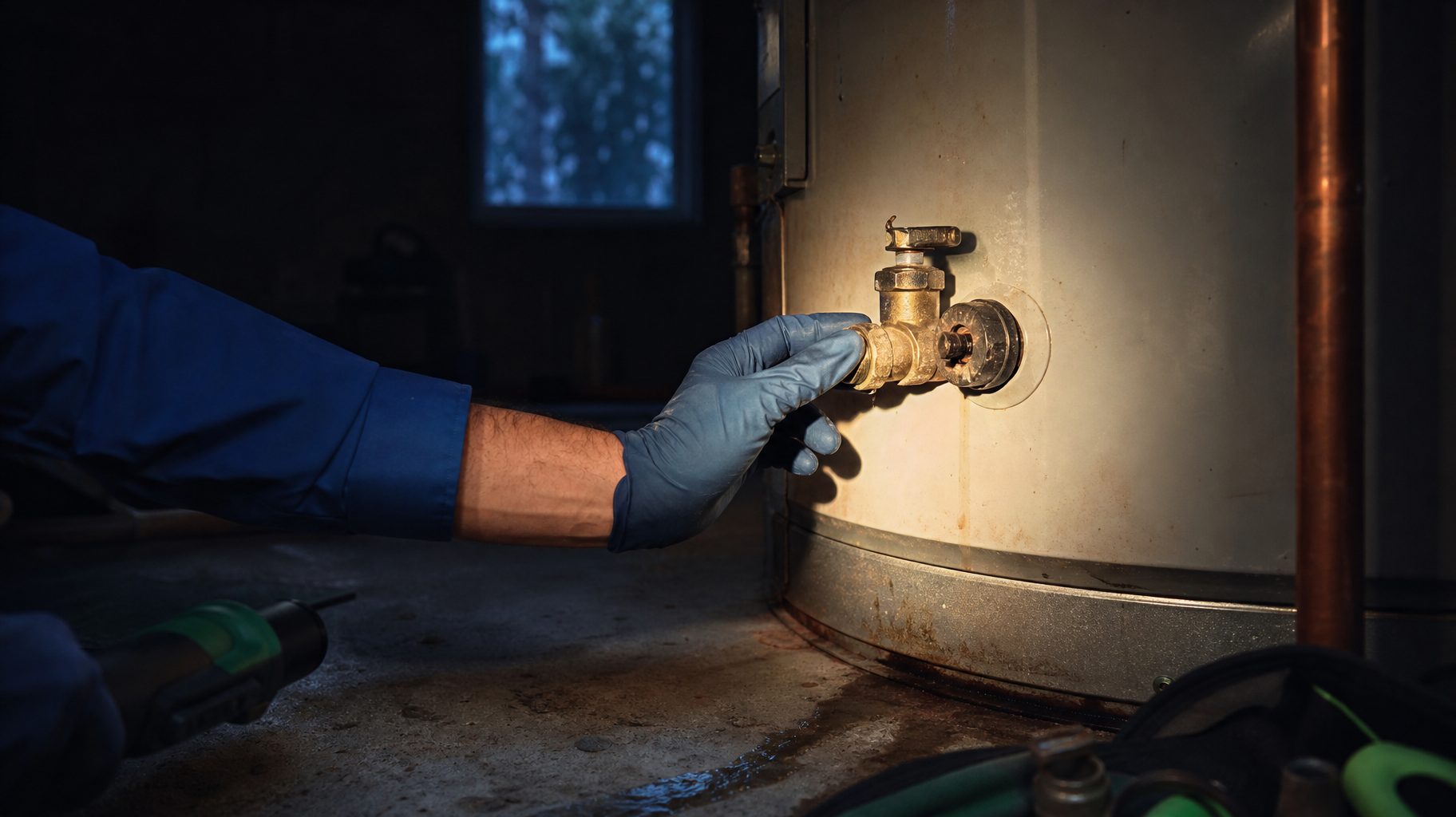
- There is moisture or pooling around the base. Any water near the tank deserves immediate attention. A small seep can become a burst tank overnight, and a full tank failure can release dozens of gallons into your home.
- It is more than 10 years old and acting up. Age plus any of the symptoms above is a strong signal. Putting repair money into a unit near the end of its life often just delays the inevitable replacement.
If you are seeing two or more of these, do not wait for the cold-shower morning. Have it inspected.
Why Panama City Beach water is hard on water heaters
Local conditions matter, and ours are not kind to water heaters.
Mineral content. Much of the water in our area carries enough dissolved minerals to leave scale behind. That scale settles as sediment in the tank, the same buildup that causes the popping sounds and the early failures. Homes without a water softener tend to see it sooner.
Heat and humidity. Garages and utility closets on the Gulf Coast stay warm and damp for much of the year. That environment encourages corrosion on tank exteriors, fittings, and connections.
Heavy demand. Between full-time households, guests, and vacation-rental turnovers, a lot of local water heaters run harder than the average unit. More demand means more cycles and faster wear.
The practical takeaway: in our area, the maintenance that extends a water heater’s life is not optional if you want to reach that 10-plus-year mark.
Repair or replace? How to decide
When a unit acts up, the question is whether to fix it or start fresh. A few guidelines help.
Lean toward repair when the unit is under about 8 years old, the problem is a single component like a thermostat or heating element, and there is no sign of tank corrosion or leaking.
Lean toward replacement when the tank itself is leaking, the unit is past 10 years, repairs are stacking up, or your hot water needs have outgrown the current size. A leaking tank cannot be repaired, only replaced, and a unit that needs its third fix in two years is telling you something.
A useful rule of thumb: if a repair costs more than half the price of a new unit and the heater is past the midpoint of its lifespan, replacement is usually the smarter long-term call. A licensed plumber can give you an honest read rather than an upsell, which is exactly the kind of straight answer we aim to give before any work begins.
How to make your water heater last longer
A little maintenance buys years. For a tank unit:
- Flush it once a year to clear out sediment. This single habit prevents the most common cause of early failure.
- Check the anode rod every few years and replace it when it is worn. This sacrificial rod corrodes so the tank does not, and replacing a worn one is far cheaper than replacing a tank.
- Test the temperature and pressure relief valve annually to make sure this critical safety device still works.
- Set the thermostat to around 120 degrees. It is hot enough for comfort and safety, easier on the tank, and lower on your energy bill.
- Consider a water softener if you have hard water, which protects not only the heater but your whole plumbing system.
For tankless units, an annual descaling keeps mineral buildup from shortening that long lifespan.
If a yearly flush is not something you want to handle, it is a quick service visit, and it is a lot cheaper than an emergency replacement on a holiday weekend.
Frequently asked questions
How long do water heaters last on average?
A standard tank water heater typically lasts 8 to 12 years, while a tankless unit can last 20 years or more. Lifespan depends heavily on water quality, usage, sizing, and maintenance. Annual flushing and anode rod care push a unit toward the high end of that range.
What are the first signs a water heater is going bad?
The earliest signs are usually rusty or discolored hot water, popping or rumbling sounds from sediment, and hot water that runs out faster than before. Any moisture around the base is a more urgent warning. Catching these early lets you plan a replacement instead of reacting to a flood.
Should I repair or replace my water heater?
Repair makes sense for newer units with a single failed part and no tank corrosion. Replace when the tank is leaking, the unit is past 10 years, or repairs are piling up. If a repair costs more than half a new unit and the heater is past its midpoint, replacement is usually smarter.
Why does my water heater make a popping noise?
That sound is water bubbling up through a layer of hardened sediment on the bottom of the tank. It is common in hard-water areas, makes the heater work harder, and shortens its life. Flushing the tank usually quiets it and helps the unit run efficiently again.
How much does a new water heater cost in Panama City Beach?
Cost depends on the type, size, and whether you switch from tank to tankless, along with any code-required updates. Rather than guess, we look at your setup and give a clear, itemized estimate before any work starts, so you know exactly what you are paying for.
Don’t wait for the cold shower
If your water heater is showing any of these signs, or you simply do not know how old it is, a quick inspection now beats an emergency later. Our licensed plumbers will tell you honestly whether yours has years left or is ready for replacement, and quote any work up front.
Call Frank Wood & Son Services at (850) 234-2168 for water heater repair, replacement, and maintenance.
Explore our plumbing services in Panama City Beach, or request a free quote and we will help you plan your next step.