Is a Whole-Home Generator Worth It on the Gulf Coast?
Hurricane season runs June through November, and on the Gulf Coast that means a stretch of months where a multi-day power outage is never far away. When the grid goes down in August heat, the questions come fast: Will the food in the fridge last? How do we keep the house cool? What about the sump pump, the well, the medical equipment?
A whole-home generator answers all of those before the storm ever arrives. But these systems are a real investment, so the honest question is whether one is worth it for your home. Here is a straight look at how they work, what they cost, and who actually benefits, with no sales pitch dressed up as advice.
What is a whole-home generator?
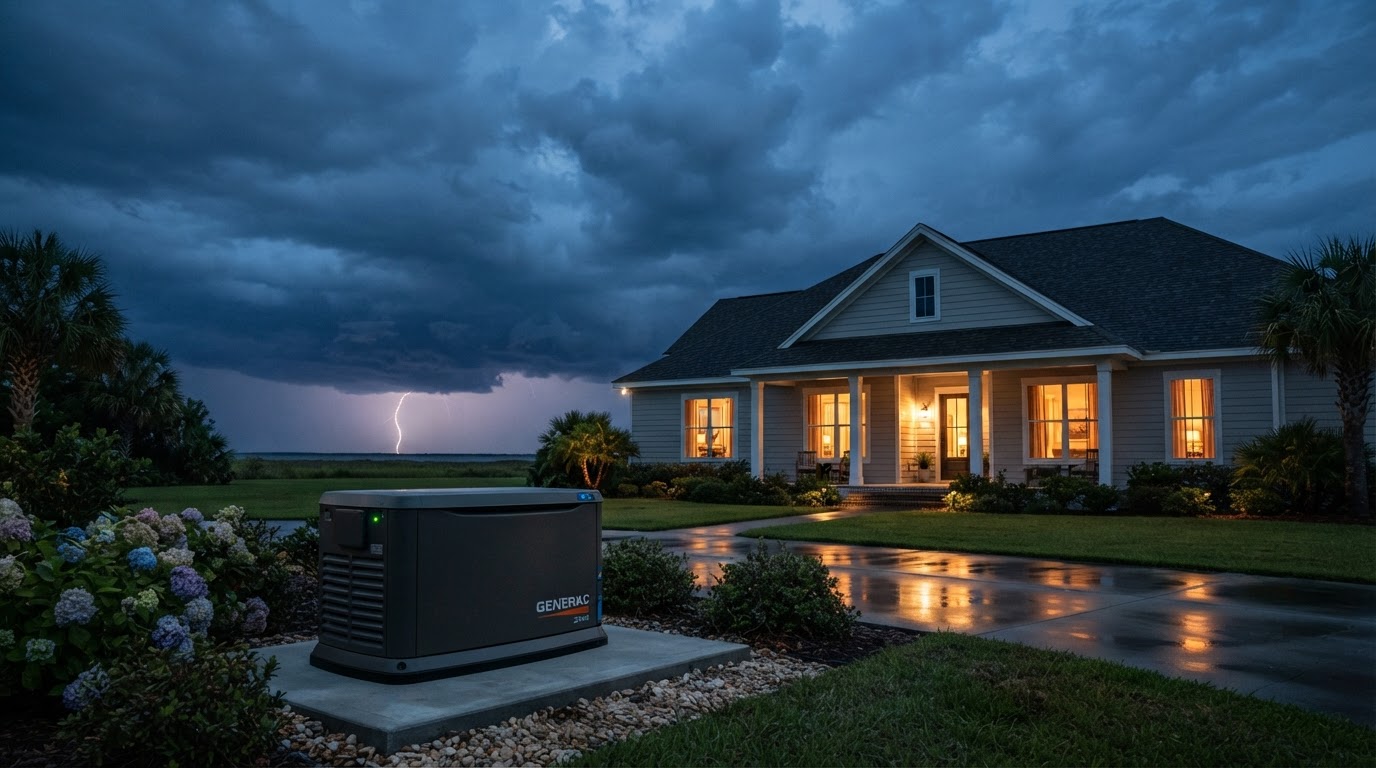
A whole-home generator, also called a standby generator, is a permanently installed unit that sits outside your house like an AC condenser. It runs on natural gas or propane and connects to your electrical panel through an automatic transfer switch.
When the power fails, it kicks on by itself, usually within seconds, and powers your home until the grid comes back. You do not have to be home, drag anything out of the garage, or run extension cords. It senses the outage, starts up, and switches your house over automatically, then shuts down and resets when utility power returns.
That hands-off operation is the core difference between a standby unit and the portable generator in your shed.
Portable vs. standby generator
Both have a place, and the right choice depends on what you need to keep running.
A portable generator is cheaper up front, but you have to roll it out, fuel it with gasoline, start it manually, and run cords to individual appliances. It must sit well away from the house because its exhaust is dangerous, and it typically powers only a few essentials at a time. During a long outage, you are also refueling it repeatedly, often when gas stations have no power either.
A standby generator costs more to install but runs automatically, draws from a fuel supply you already have, powers your whole home or selected circuits, and needs no babysitting. For the multi-day outages that follow a real storm, that difference is significant.
The simplest way to frame it: a portable unit gets you through a few hours of inconvenience, while a standby unit gets you through days of genuine disruption.
Is it worth it on the Gulf Coast?
For many homes in our area, yes, and here is the honest reasoning rather than a blanket pitch.
Outage frequency and length. Coastal Florida sees more frequent and longer storm-related outages than most of the country. A standby generator turns a multi-day outage into a non-event.
Heat is a safety issue, not a comfort one. Losing AC during a Gulf Coast summer is not just uncomfortable. For older adults, young children, and anyone with health conditions, days without cooling can be dangerous.
Critical systems. If you rely on a well pump, a sump pump, a septic pump, or medical equipment like a CPAP or oxygen concentrator, an outage is more than a nuisance. A generator keeps those running without interruption.
Food and remote work. A full refrigerator and freezer can represent hundreds of dollars of food, and a single long outage can wipe it out. For anyone working from home, staying powered also means staying employed during a storm week.
Vacation rentals. If you own a rental property here, an outage can mean canceled bookings, refunds, and bad reviews. A standby generator protects both guest safety and your income.
Resale and peace of mind. A professionally installed standby generator is an attractive feature to buyers in a hurricane-prone market, and many homeowners simply value not having to think about outages at all.
Where it may not pay off: a small home in an area with very stable power, a tight budget where a quality portable unit covers your true essentials, or a property you are about to sell. A good contractor will tell you that honestly rather than sell you more system than you need.
What it costs and what affects the price
Whole-home generators are a meaningful investment, and the total varies widely based on your home. Rather than quote a single misleading number, here is what actually drives the price:
- Size of the unit, measured in kilowatts, based on how much of your home you want to power.
- Fuel type and supply, including whether you have natural gas at the house or need a propane tank.
- Electrical work, including the transfer switch and any panel upgrades your home needs.
- Gas line work, which may involve a plumber to run or size the supply line.
- Site prep and permits, including the concrete pad, placement, and local code requirements.
Because our company handles electrical and plumbing under one roof, the gas line and the electrical hookup do not require coordinating two separate contractors, which keeps the project simpler and the timeline shorter. The right next step is an in-home assessment and a clear, itemized quote, not a number off the internet.
Sizing and installation: why this is a pro job
Generator sizing is where good planning pays off. Undersize it and it cannot carry your load. Oversize it and you have paid for capacity you will never use. A proper load calculation looks at your AC, well or sump pumps, water heater, kitchen, and the circuits you most want to protect, then matches the unit to that.
Installation is not a DIY project. It involves connecting to your electrical panel, installing an automatic transfer switch, running and sizing a gas line, setting the unit on a proper pad, and pulling the required permits. This is licensed electrical and gas work for good reason, and doing it correctly is what keeps your family and your home safe.
Safety matters more than people realize
Generators are safe when installed and used correctly, and genuinely dangerous when they are not.
The biggest risk is carbon monoxide, which is why a standby unit is placed outdoors at a safe distance with proper exhaust, never in a garage or near windows. The second is backfeeding, where power flows backward into the grid and can electrocute utility workers. A professionally installed transfer switch prevents that entirely, which is one more reason these systems are not a weekend project.
A correctly installed standby generator handles all of this automatically. That is the whole point: safety and continuity without you having to manage it during the worst part of a storm.
Frequently asked questions
How much does a whole-home generator cost?
The total depends on the unit size, your fuel setup, the electrical and gas work your home needs, and permitting. Because of those variables, a reliable number only comes from an in-home assessment. We evaluate your home’s load and provide a clear, itemized quote with no surprises before any work begins.
What size generator do I need for my house?
It depends on what you want to power. Some homeowners want the entire house covered, while others prioritize essentials like the AC, refrigerator, and key circuits. A professional load calculation matches the unit to your actual needs so you do not pay for unused capacity or come up short during an outage.
How long can a whole-home generator run?
A standby generator connected to natural gas can run for days or as long as the gas supply holds. Propane units run until the tank is depleted, so tank size determines runtime. Either way, you get continuous power through the multi-day outages that follow major storms.
Does a whole-home generator add value to my home?
In a hurricane-prone market like ours, a professionally installed standby generator is an appealing feature for buyers and can support resale value. Just as important for many owners is the peace of mind it provides during storm season.
Can I install a standby generator myself?
No. Installation involves connecting to your electrical panel, wiring an automatic transfer switch, and running a properly sized gas line, all of which require licensing and permits. Incorrect installation creates serious carbon monoxide and electrical hazards, so this is work for a licensed professional.
Get ahead of storm season
The best time to install a whole-home generator is before the next storm is on the radar, not when one is three days out and every installer in the county is booked. If you want to know whether one makes sense for your home and what it would actually cost, we will give you a straight answer.
Call Frank Wood & Son Services at (850) 234-2168 to schedule a generator assessment.
Learn more about our electrical services in Panama City Beach, or request a quote and we will walk you through your options.