Burning Smell From Furnace? What Is Normal and What Is Not
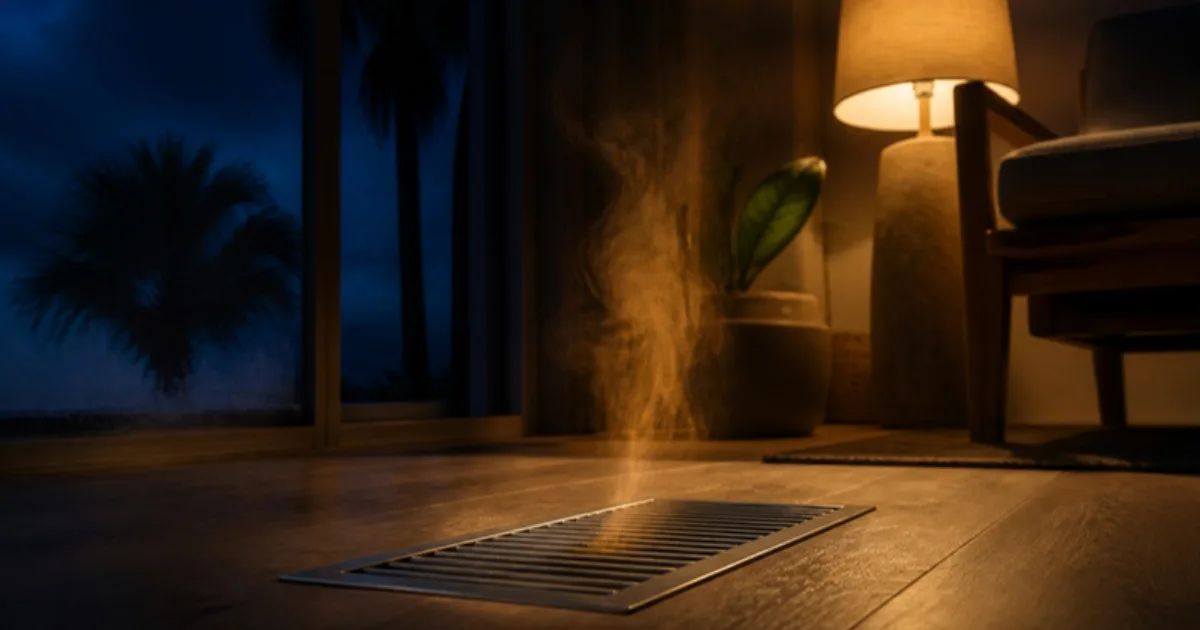
The first real cold front of the year finally rolls into Panama City Beach, you switch the thermostat from cool to heat, and within a few minutes the whole house smells like a toaster that has not been cleaned since spring. A burning smell from furnace vents on that first night is one of the most common calls we get every November, and most of the time it is harmless. Sometimes it is not, and the difference matters.
A burning smell from furnace vents is usually dust burning off the heat exchanger or electric heat strips after months of sitting unused, and it should fade within an hour; a smell that lingers, smells like plastic, or smells like rotten eggs is not normal.
This guide walks through every version of a burning smell from furnace or heat pump vents you are likely to notice, what each one usually means in a Gulf Coast home, what you can safely do yourself, and when to shut the system off and call a licensed technician.
Why is there a burning smell from furnace vents the first time the heat comes on?
The short answer is dust. From roughly April through October, your heating side sits idle while the AC does all the work, and a thin layer of dust settles on the heat exchanger in a gas furnace or on the electric heat strips inside a heat pump air handler. The first time those parts get hot, that dust cooks off, and you get a burning smell from furnace registers all over the house.
Here in Bay County that idle stretch is longer than almost anywhere in the country. Some years the heat runs only a handful of nights before Christmas. The longer the system sits, the more dust collects, so the first burning smell from furnace vents can be stronger than people expect.
A few things make it worse in our area:
- Beach sand and fine dust. Sand tracked in from the beach breaks down into fine grit that finds its way into the return and settles inside the air handler.
- Attic and garage air handlers. Many Panama City Beach homes have the air handler in a hot attic or a garage closet, where dust and debris build up faster than in a conditioned closet.
- A tired air filter. A filter that has been loading up all summer lets more dust pass through to the heating parts.
- Vacation rentals and second homes. Houses that sit closed up for weeks collect more dust and get less filter attention.
The normal dusty burning smell from furnace parts usually lasts anywhere from a few minutes to about an hour. If it is still going strong after the system has run for a while, or it comes back every time the heat cycles on, something else is going on.
Does a heat pump get the same burning smell?
Yes. Most homes here heat with a heat pump, not a gas furnace, and the indoor air handler on a heat pump has electric heat strips for backup. Those strips work like the coils in a toaster. When they kick on for the first time in months, they give off the same dusty burning smell from heater vents that a furnace does.
Heat strips also come on during defrost cycles and whenever the system needs extra help on a cold morning, so you may notice the smell on and off during the first cold week, not just once. If you are not sure whether your system is a heat pump or a furnace, our guide on heat pump vs gas furnace for a Panama City Beach home explains the difference in plain terms.
What does each smell usually mean?
Not every burning smell from furnace vents is the same, and that is the most useful thing to know before you decide whether to wait it out or turn the system off. Use this table as a quick reference.
| What you smell | Most likely cause | What to do |
|---|---|---|
| Dusty, toasty, like a hair dryer | Dust burning off the heat exchanger or heat strips | Open a window, let it run, and expect it to fade within an hour |
| Burning plastic or hot rubber | An overheating motor, wiring, or an object that fell into a vent | Shut the system off at the thermostat and breaker, then call a technician |
| Electrical or metallic, like a hot wire | A failing blower motor, capacitor, or electrical connection | Shut it off and call for service |
| Rotten eggs or sulfur | Possible gas leak on a gas or propane furnace | Leave the house and call 911 and your gas supplier from outside |
| Smoky, like a campfire | A blocked flue or venting problem on a gas furnace | Shut it off, ventilate, and call for service |
| Musty or like dirty socks | Moisture and microbial growth on the coil or in the ducts | Not an emergency, but schedule a cleaning and inspection |
| Oily or like burnt oil | A blower motor running hot or a new part curing | Watch it; if it lingers past a day, call for service |
The normal one: dust burning off
The dusty burning smell from furnace parts smells a lot like a hair dryer that has not been cleaned in a while. It is strongest the first few minutes the heat runs, it spreads evenly through the house, and it fades on its own. There is no smoke, no haze, and nothing that burns your eyes.
The not-normal one: burning plastic or electrical smells
A sharp, chemical smell like melting plastic or hot wiring is different. That kind of burning smell from furnace or air handler cabinets can mean a motor is overheating, a wire connection is failing, or something like a toy or a piece of plastic fell into a floor register and is sitting against a hot part. Do not wait for this one to clear. Turn the system off at the thermostat, switch off its breaker, and call a licensed technician.
The emergency one: rotten eggs
If you have a gas or propane furnace and you smell rotten eggs or sulfur, that is not a burning smell from furnace dust at all. Gas suppliers add that odor so a leak is easy to notice. Leave the house, take everyone with you, and call 911 and your gas utility or propane supplier once you are safely outside. Our guide to the signs of a gas leak at home covers exactly what to do and what not to touch on the way out.
How long should a burning smell from furnace vents last?
For the normal dust burn-off, a burning smell from furnace vents should last a few minutes up to about an hour of run time. Most homeowners notice it fading by the time the house reaches the set temperature.
If the burning smell from furnace vents is still strong after an hour, comes back every single time the heat cycles on over several days, or gets stronger instead of weaker, treat it as a problem rather than dust. A clogged filter, a motor running hot, or debris stuck on a heat strip can all produce a smell that keeps returning.
What can you safely do yourself?
Several things are well within reach for any homeowner, and they clear up a normal burning smell from furnace vents most of the time.
- Replace the air filter before the first cold night. A fresh filter keeps new dust from reaching the heating parts. If you are not sure which filter to buy, our post on what MERV rating to use in a Florida home walks through it.
- Open a couple of windows and let the system run through the burn-off. Fresh air clears the smell faster.
- Check your floor and wall registers for anything that may have fallen in over the summer, like a sock, a toy, or a dryer sheet.
- Vacuum the return grille and the area around the air handler if you can reach it safely.
- Test your smoke alarms and carbon monoxide alarms at the start of heating season, especially if you have any gas appliances.
What you should not do is open the air handler cabinet, remove panels on a gas furnace, or try to clean heat strips or a heat exchanger yourself. Those parts carry high voltage or open flame, and a mistake can cause a shock, a fire, or a carbon monoxide problem.
When should you shut the heat off and call a pro?
Shut the system off and call when any of these are true:
- The smell is like burning plastic, rubber, or hot electrical wiring.
- You see smoke or haze coming from a register or the air handler.
- The burning smell from furnace vents is still strong after the system has run for an hour.
- A breaker trips when the heat comes on.
- You smell rotten eggs or sulfur (leave the house first, then call 911 and your gas supplier).
- A carbon monoxide alarm goes off.
- You hear grinding, squealing, or buzzing along with the smell.
On the carbon monoxide point, the U.S. Consumer Product Safety Commission reports that more than 200 people in the United States die each year from accidental non-fire carbon monoxide poisoning linked to consumer products. Carbon monoxide has no smell at all, so a burning smell from furnace vents is never your warning for it. Only a working CO alarm is.
The National Fire Protection Association notes that December, January, and February are the peak months for home heating fires. That is one more reason to deal with a lingering burning smell from furnace vents in November rather than living with it into the holidays.
Why a tune-up before the first cold front makes sense here
A heating tune-up in October or early November catches most of the problems behind a bad burning smell from furnace or air handler parts before they turn into a no-heat call on the coldest night of the year.
During a tune-up, a technician typically checks:
- Heat strips and their electrical connections on a heat pump system
- The blower motor, capacitor, and wiring
- Burners, flame sensor, and the heat exchanger on a gas furnace
- Flue and venting on any gas or propane appliance
- The air filter, drain line, and general cleanliness of the cabinet
- Thermostat settings, including whether emergency heat is set up correctly
Because heating season here is short, many homeowners skip the heating side entirely and only service the AC in spring. That works until a heat strip connection that has been slowly overheating for two winters finally fails. If your heat pump is running but the house is not warming up, our guide on why a heat pump is not heating in Panama City Beach explains what is normal on a cold morning and what is not.
A typical November call
Here is how a lot of these calls go. The first cold night of the season hits, a family in a Panama City Beach home switches on the heat, and a burning smell from furnace vents fills the house within five minutes. They worry about a fire, open the windows, and call us. In most of those cases, the smell fades before a technician even arrives, and the visit turns into a quick check and a filter change.
The calls we take seriously are the ones where the burning smell from furnace vents is sharp and chemical, or it keeps coming back two and three days later. Those often turn out to be a heat strip connection that has started to overheat, a blower motor on its way out, or something sitting inside the cabinet that should not be there. Caught early, those are usually straightforward repairs. Ignored, they can take out a motor or a control board, or worse.
Frequently asked questions
Is a burning smell from furnace vents normal the first time I turn on the heat?
Yes, in most cases. After months of sitting idle, dust settles on the heat exchanger or electric heat strips, and it burns off the first time they heat up. The smell is usually dusty or toasty, spreads through the house, and fades within about an hour of run time. If it smells like plastic or wiring, or keeps coming back, have it checked.
Why does my heater smell like burning when I turn it on?
When a heater smells like burning on the first cold night, the cause is usually dust cooking off the heating parts. In heat pump homes, electric heat strips give off the same smell. A clogged filter, debris in a register, or an overheating motor can cause a stronger or longer lasting smell. Change the filter first, then call a technician if the smell does not fade.
How long does the burning smell last when the heat first comes on?
The normal dust burn-off usually lasts from a few minutes up to about an hour of run time. Opening a couple of windows helps clear it faster. If the smell is still strong after an hour, returns every time the heat cycles on over several days, or gets stronger, it is no longer normal and the system should be inspected.
Can a burning smell from furnace parts cause a fire?
The normal dust smell does not, but some burning smells point to problems that can. An overheating motor, a failing wire connection, or an object resting against a hot heat strip can all start a fire if ignored. If you smell burning plastic or hot wiring, or see smoke, shut the system off at the thermostat and breaker and call for service.
Why does my heat pump smell like burning?
Most heat pumps have electric heat strips in the indoor air handler for backup heat and defrost cycles. When those strips run for the first time in months, the dust on them burns off and gives a burning smell from heater vents. It can come and go during the first cold week as the strips cycle. A smell that lingers or turns chemical needs a technician.
What does a burning plastic smell from the heater mean?
A burning plastic smell usually means something is overheating. Common causes include a blower motor running hot, a failing electrical connection, a melting wire jacket, or a plastic object that fell into a register and is touching a hot part. Turn the system off at the thermostat and the breaker, check your registers if it is safe, and call a licensed technician.
Should I turn off my heat if it smells like burning?
If the smell is dusty and fading, you can let it run with a window open. Turn the heat off right away if the smell is like plastic, rubber, or wiring, if you see smoke, if a breaker trips, or if the smell lasts more than an hour. If you smell rotten eggs, leave the house and call 911 and your gas supplier from outside.
Can a dirty air filter cause a burning smell?
Yes. A dirty filter lets more dust through to the heat strips or heat exchanger, which makes the first burn-off stronger. A badly clogged filter also restricts airflow, so heating parts run hotter than they should, and that can cause a lingering smell. Replacing the filter before heating season is the simplest way to reduce a burning smell from furnace vents.
Is a burning smell from my furnace a sign of carbon monoxide?
No. Carbon monoxide has no smell, color, or taste, so you cannot detect it by odor. A burning smell from furnace parts is a separate issue. That said, any home with a gas or propane furnace should have working carbon monoxide alarms on every level and outside sleeping areas, and a yearly inspection of the burners, heat exchanger, and venting.
How much does it cost to fix a burning smell from the heater?
It depends on the cause. A normal dust burn-off costs nothing, and a filter change is inexpensive. A failing motor, capacitor, heat strip connection, or control part costs more, depending on the part and the system. A technician needs to diagnose it first. Frank Wood & Son Services gives a clear estimate before any repair work begins, so there are no surprises.
Still smelling burning? Get it checked by a local technician
If the burning smell from furnace vents in your Panama City Beach home is not fading, smells like plastic or wiring, or keeps coming back, do not wait for the coldest night of the year to find out why. Frank Wood & Son Services is a family-owned, Veteran-owned, licensed and insured company that has served Bay County since 1985. Our technicians inspect heat pumps, heat strips, and gas and electric furnaces, find the real cause, and quote the repair before we start. See our heating services in Panama City Beach.
Call (850) 234-2168 or schedule a heating check online. We offer 24/7 emergency service, so if the heat smells wrong on a cold night, you can reach us any hour.