Grease Trap Maintenance for Panama City Beach Restaurants
If you run a kitchen on Front Beach Road, you already know March and July do not feel like October. The fryers run all day, the dish pit never stops, and every plate that comes back sends a little more grease down the drain. A steady service schedule is what keeps that busy season from ending with a backed-up floor drain in the middle of a Saturday dinner rush.
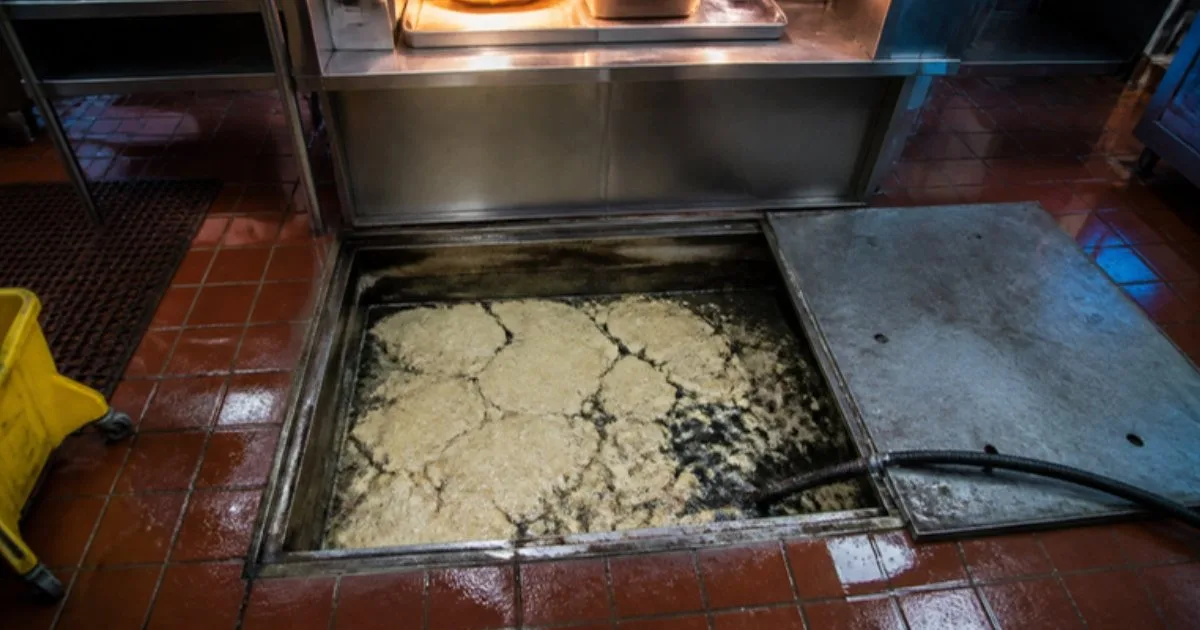
Grease trap maintenance is the routine pumping, cleaning, and inspection of the tank that catches fats, oils, and grease before they reach the sewer, done often enough that the trap never overfills.
This guide is for restaurant managers, hotel and condo kitchen operators, and food truck owners in Panama City Beach and Bay County. It is what Frank Wood & Son Services tells kitchen managers on the first visit.
What does a grease trap actually do?
A grease trap slows kitchen wastewater down so fats, oils, and grease float to the top and food solids sink to the bottom, letting cleaner water pass on to the sewer. It only works while there is room left inside it.
Hot, greasy water looks harmless going down the drain. Then the grease cools, turns solid, and sticks to the pipe until the line closes.
Baffles inside the trap hold back the floating grease while clearer water flows out. Once the grease layer gets too thick, it starts slipping past the baffles, and that is where grease trap maintenance earns its keep.
Grease trap vs. grease interceptor
The two names get used loosely, but there is a real difference.
- A grease trap is usually a smaller unit inside the building, often under or near a sink.
- A grease interceptor is a much larger tank, usually buried outside, that serves the whole kitchen.
A bigger tank goes longer between pumpings, but grease trap maintenance on an interceptor is still not optional.
How often should a restaurant schedule grease trap pumping?
Most commercial kitchens need grease trap pumping somewhere between every few weeks and every few months, depending on trap size, menu, and volume. Your utility may also set a required interval.
A coffee shop does not load a trap the way a seafood house running four fryers does, so grease trap maintenance has to fit your kitchen. A common rule of thumb in the industry is to pump before the combined layer of floating grease and settled solids reaches about a quarter of the trap’s depth. Treat that as common practice, not a legal standard, and check your utility’s rules for what applies to you.
Here is a rough starting point for grease trap maintenance by kitchen type.
| Kitchen type | Typical load | Common starting schedule | Signs you need service sooner |
|---|---|---|---|
| Coffee shop, deli, or bakery | Light grease, some solids | Every 2 to 3 months | Odors, slow hand sink |
| Food truck or mobile vendor | Small tank, heavy grease | Every few weeks in season | Smells near the window |
| Fast casual or pizza | Moderate grease, steady volume | Monthly to every 6 weeks | Slow floor drains on busy nights |
| Full-service restaurant with fryers | Heavy grease and solids | Every 2 to 4 weeks | Backups at the dish pit |
| Hotel, condo, or banquet kitchen | Heavy, spiky volume | Every 2 to 4 weeks, more during events | Backups after large functions |
After two or three visits, the crew can tell you how full the trap was each time, and your grease trap maintenance schedule gets adjusted from there.
Why tourist season changes grease trap maintenance in Panama City Beach
Spring break and summer can multiply the meals a beach kitchen serves, and more meals means more grease reaching the trap in fewer days. A schedule that works in January can fail in June.
This is the biggest mistake we see on the coast. A restaurant sets its grease trap maintenance schedule in the slow months, and nobody revisits it. Then covers double, and the trap that needed service every six weeks is full in three.
What helps:
- Shorten your pumping interval before spring break, not after the first backup.
- Book season dates early, since every kitchen on the beach wants service at once.
- Ask for a check after your biggest weekends.
- Drop back to the off-season schedule once volume really slows in the fall.
On the Gulf Coast, grease trap maintenance follows the calendar. If your schedule does not change with the season, it is wrong for half the year.
What are the FOG compliance rules in Bay County?
FOG compliance means following your sewer utility’s rules for fats, oils, and grease, which usually cover trap pumping, records, and inspections. The exact rules depend on which utility serves your building.
The City of Panama City, for example, runs a Fats, Oils and Grease program that applies to any establishment discharging into a City-owned or operated wastewater collection system. It sorts establishments by type, from delis, coffee shops, and mobile food vendors up through full-service restaurants and buffets over 65 seats, plus institutional users like schools and hospitals. Monthly surcharges fall in the $10 to $25 range. Re-inspection fees for noncompliance start at $100 and escalate for repeat failures, up to $1,000 per day, and penalties can go as far as discontinuance of service.
That is one city’s program. If your kitchen is in Panama City Beach, confirm your own requirements with City of Panama City Beach Utilities, since rules differ by system. Ask how often you must pump, what records you must keep, and who is allowed to haul the waste.
Keep records like an inspector will ask for them
Keep every pumping receipt or manifest in one folder, with the date, the volume removed, and the company that did the work. Good records are part of grease trap maintenance, and a clean folder answers most inspector questions before they are asked.
What daily kitchen habits cut down on grease?
The less grease and food that reaches the trap, the longer it lasts between pumpings. Daily habits do more for grease trap maintenance than any product you pour down a drain.
The City of Panama City Beach FAQ on fats, oils, and grease tells residents to put cooled grease in a covered container, wipe up spills, scrape plates into the trash, and use sink strainers. Those same habits are the backbone of a clean commercial kitchen.
Train your crew to:
- Scrape every plate and pan into the trash before it hits the sink.
- Use strainers in every sink drain and empty them into the trash.
- Pour used fryer oil into a covered container or recycling bin, never down a drain.
- Wipe grease out of pans and sheet trays with a paper towel before washing.
- Stop running hot water to “flush” grease through. It just cools and sets up further down the line.
Skip the miracle additives
Be skeptical of enzymes and chemicals that claim to dissolve grease. Many only break grease into smaller pieces that pass through the trap and harden again downstream. Some utilities restrict them for that reason. Ask your utility before using anything, and never treat an additive as a substitute for real grease trap maintenance.
What are the warning signs of a full grease trap?
The clearest warning signs are slow drains, sour or sewer odors, grease in the floor drains, and water backing up at the dish area. Any of these means grease trap maintenance is overdue.
A busy line cook has no time to notice a slow sink, so managers need to know what to look for.
- Sinks that used to empty fast now hold water.
- A sour, rotten smell near the dish pit or the outdoor interceptor lid.
- Floor drains gurgling when water runs elsewhere.
- Grease or food solids showing up in floor drains or cleanouts.
- Water rising out of a floor drain during peak hours.
If you see two of these at once, do not wait for the scheduled visit. A backup during dinner can mean closing the kitchen and throwing out food, which costs far more than an extra pumping.
When does a kitchen need commercial hydro jetting?
Commercial hydro jetting uses high-pressure water to scour grease and debris off the inside walls of drain lines. You need it when the lines leading to or from the trap are coated with buildup that pumping alone will not touch.
Pumping empties the tank but does nothing for the pipe. A snake punches a hole through a clog and leaves most of the coating behind. Jetting cleans the whole pipe wall, so it tends to last longer.
| Option | What it does | Best for | Limitation |
|---|---|---|---|
| Grease trap pumping | Removes grease and solids from the tank | Routine scheduled service | Does not clean drain lines |
| Drain snaking | Breaks through a single clog | Getting water moving fast | Leaves grease on pipe walls |
| Commercial hydro jetting | Scours the full pipe wall | Lines with heavy buildup | Needs a pro and the right equipment |
Most kitchens do well jetting a few times a year as part of regular grease trap maintenance.
Is a preventative grease program worth it?
A preventative grease program puts pumping, line jetting, and drain checks on a set schedule so problems get handled before they become backups. It makes the most sense for busy kitchens that cannot afford surprise downtime.
Honestly, not every business needs one. A small coffee shop may do fine with basic grease trap maintenance and a calendar reminder.
A full-service restaurant, hotel kitchen, or busy food court is different. There, grease trap maintenance on a written schedule pays for itself by avoiding even one Saturday night shutdown.
Frank Wood & Son Services sets up preventative programs for commercial kitchens in Panama City Beach and Bay County, covering grease trap pumping, hydrojetting, and the equipment around the trap like commercial dishwashers and industrial floor drains. We work around your business hours and give you a written estimate before work starts.
Think about storms, too. Our hurricane season prep checklist for Bay County is written for homes, but booking a pumping before a storm is smart business as well.
Frequently asked questions
How often should I pump my restaurant’s grease trap?
Most restaurants pump somewhere between every two weeks and every three months. Heavy fryer kitchens sit at the short end and light-grease cafes at the long end. A common industry practice is to pump before grease and solids reach about a quarter of the trap’s depth. Check with your sewer utility, because some set a required interval, and pump more often during spring break and summer.
What is the difference between a grease trap and a grease interceptor?
A grease trap is usually a smaller unit inside the building, often near a sink. A grease interceptor is a much larger tank, typically buried outside, that serves the whole kitchen. Both separate fats, oils, and grease from wastewater the same way. The interceptor holds more, so it usually goes longer between pumpings, but it still needs regular grease trap maintenance.
What does FOG compliance mean for my business?
FOG compliance means meeting your sewer utility’s rules on fats, oils, and grease. That usually includes a working trap, pumping on schedule, keeping records, and passing inspections. In the City of Panama City program, failed inspections bring re-inspection fees that start at $100 and escalate for repeat failures. Panama City Beach businesses should confirm their own rules with City of Panama City Beach Utilities.
Can I do my own grease trap maintenance?
Staff can handle the daily side, like scraping plates and emptying strainers. Pumping is another matter. Small indoor traps are messy to clean by hand, large in-ground interceptors need a pumping truck, and many utilities expect records showing who removed the waste and where it went. For most commercial kitchens, a professional is the safer path for compliance.
What happens if my grease trap overflows?
Grease and food solids pass into the drain lines and can cause backups inside the kitchen, often through floor drains. You may have to stop cooking until the line is cleared, and grease reaching the sewer can lead to utility penalties. Call for emergency service right away, then rework your grease trap maintenance schedule so the same thing does not happen next month.
Do enzyme or bacteria additives replace grease trap pumping?
No. Additives do not replace pumping. Many products only break grease into smaller pieces that pass through the trap and harden again further down the sewer line. Some utilities restrict their use for that reason. If you want to try one, ask your sewer utility first, and keep your regular pumping schedule no matter what the label promises.
Why does my kitchen smell like sewage near the dish pit?
A sewer or sour smell near the dish area usually points to a trap that is full or close to it, a dry floor drain, or a line with grease buildup. Start by checking when the trap was last pumped. If it is overdue, schedule grease trap maintenance. If it was pumped recently and the smell remains, have the lines inspected and possibly jetted.
How does tourist season affect grease trap maintenance in Panama City Beach?
Tourist season can sharply raise the number of meals a kitchen serves, which fills the trap faster. A schedule that works in the slow months may leave you with a full trap in half the time during spring break or summer. Tighten your schedule before the season starts, book service dates early, and add checks after your busiest weekends.
Do food trucks need grease trap pumping?
Yes. Food trucks and mobile food vendors still produce grease, and many have small tanks that fill quickly. The City of Panama City program lists mobile food vendors as one of its establishment types. Rules depend on where you operate and discharge, so check with the utility serving your commissary or base, and plan more frequent service on busy beach weekends.
When should I call for commercial hydro jetting?
Call for commercial hydro jetting when drains stay slow right after the trap was pumped, when backups keep coming back, or when you see grease in floor drains and cleanouts. Those signs suggest the pipes themselves are coated with grease. Jetting scours the full pipe wall, which usually holds up longer than snaking through a single clog.
Book grease trap maintenance with a Panama City Beach plumber who knows kitchens
If your schedule has not changed since the slow season, or your floor drains are already sending warning signs, get grease trap maintenance on the books now. Frank Wood & Son Services is family-owned and Veteran-owned, licensed and insured, and has served Panama City Beach and Bay County since 1985, with 24/7 emergency service for commercial clients when a backup will not wait.
See what we do for restaurants, hotels, and other businesses on our commercial plumbing services page, browse our full plumbing services, or request a written estimate online. Prefer to talk it through? Call (850) 234-2168.